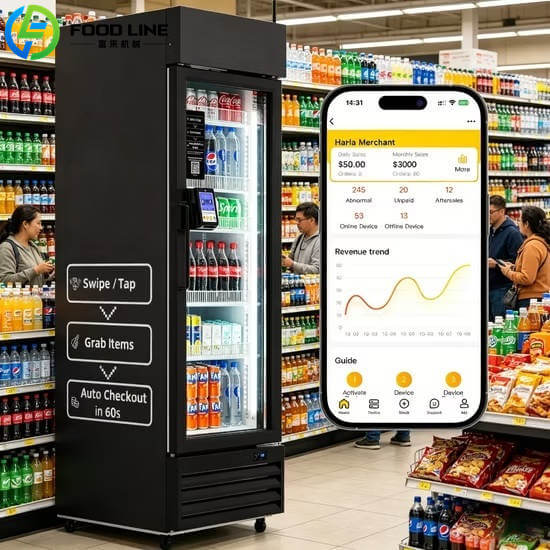
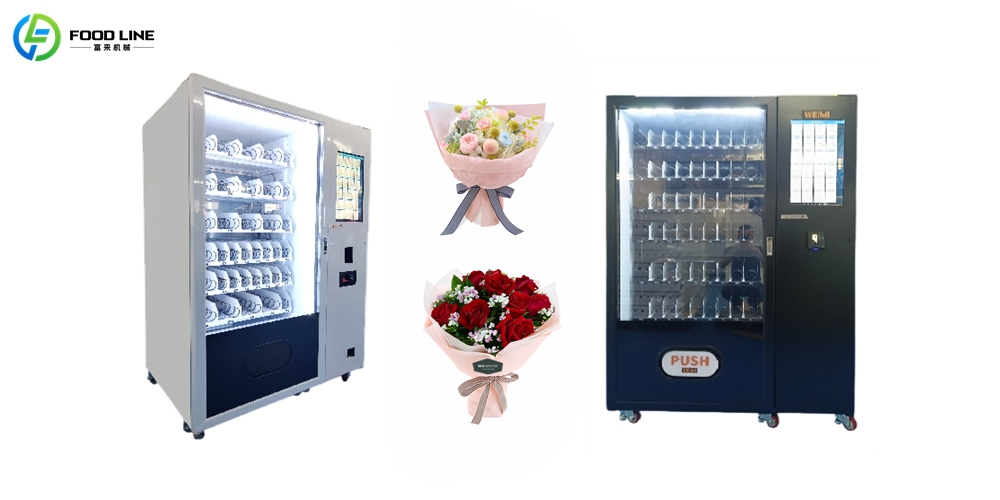
The AI smart vending machine brings brand-new shopping ways totally different from traditional ones. You must be familiar with traditional vending machines: press buttons, wait for goods to drop, face stuck items, payment issues and single-item purchase limits. By contrast, AI smart open-door vending machine allows you to simply open the door, pick out whatever items you desire, and then close the door. The payment process happens automatically. No buttons to press, no agonizing wait for items to drop, and no worries about items getting stuck.
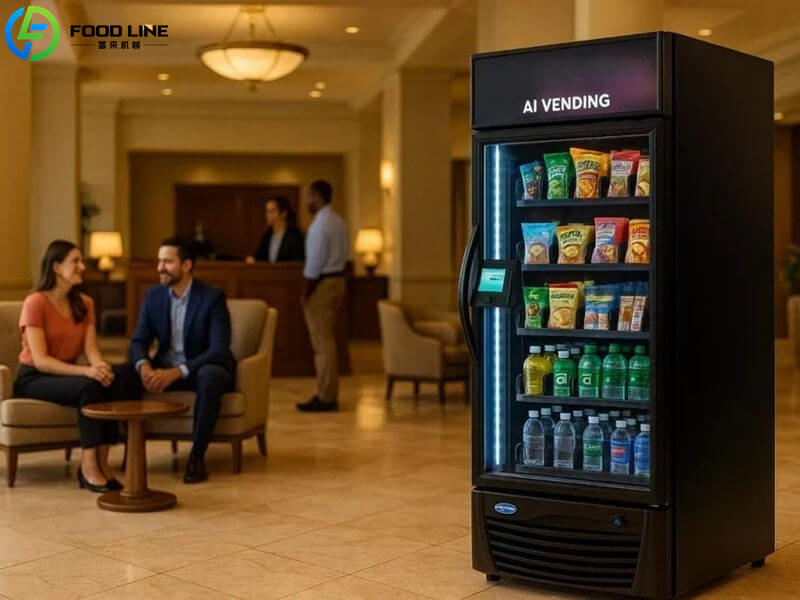
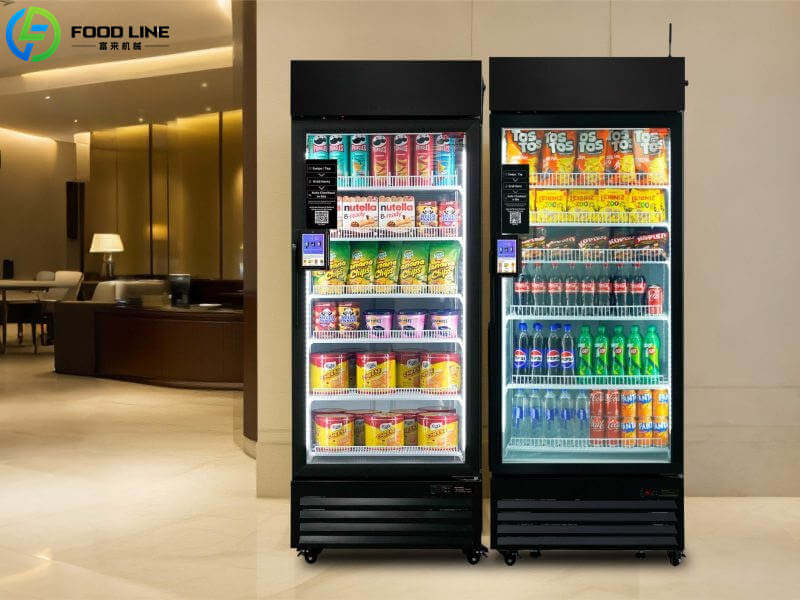
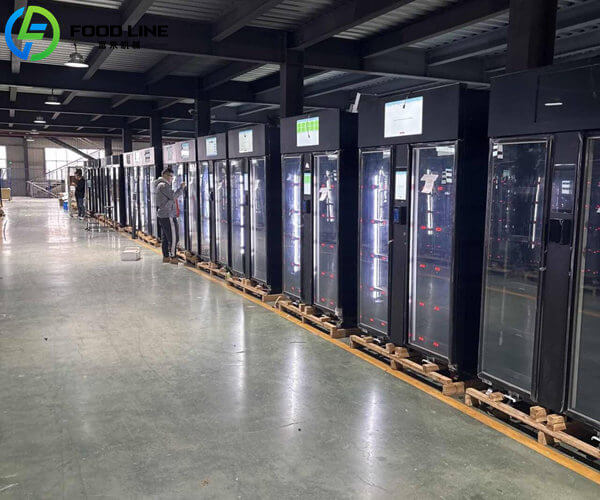
24h unattended AI smart vending machine
Many merchants and consumers want to know the differences between these two types of vending machines. Let me walk you through the details and reveal the secrets.
Differences Between AI Smart Vending Machine and Traditional Vending Machine
1. Shopping Process
Traditional vending machines follow a fixed “pay first, get goods later” workflow. Users select items on the screen or button panel, pay by inserting coins or banknotes, swiping cards, or scanning QR codes, and then wait for the machine to eject the item from a designated track. Only one item can be purchased per transaction.
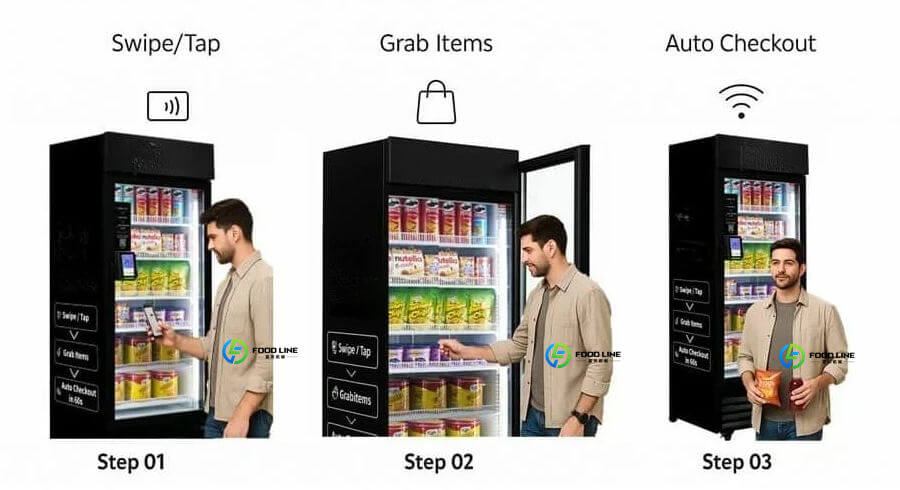
A smart AI vending machine adopts an open-door shopping mode. Users swipe their cards to unlock the cabinet door, select the desired items, and close the door to complete automatic payment. No manual confirmation or waiting for retrieval is required.
how to use ai vending machine
2. User Experience
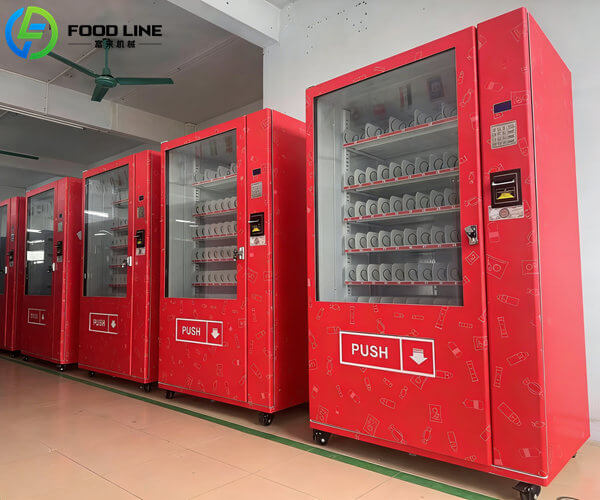
Traditional vending machines have many limitations in the shopping experience. Users can only view the products through a sealed glass window, unable to touch or examine them closely. Mechanical malfunctions are frequent, causing users to be unable to pay or retrieve their items. This rigid process brings many inconveniences to daily use.
The AI smart vending machine creates a mini-supermarket-like shopping experience. Users can open the cabinet door, touch and inspect the products, and take multiple items at once. The entire shopping process takes only 60 seconds and is free from mechanical malfunctions affecting the shopping experience.
3. Core Working Principle
Traditional vending machines rely entirely on mechanical transmission components. Built-in springs or conveyors rotate and eject the items after payment confirmation. Traditional vending machines rely on the movement of physical components and lack digital recognition or data analysis capabilities.
AI-powered vending machine, on the other hand, relies on digital recognition technology. It uses an intelligent system to capture user picking behavior and match it with product data. It achieves automatic counting and billing of goods without the need for a mechanical pushing structure.
4. Supported Product Types
Traditional vending machines are only suitable for standardized, hard-packaged goods. Bottled beverages, packaged snacks, and sealed candies are their main products. Fragile, soft, or irregularly shaped items cannot be placed in the mechanical tracks because they are easily damaged by compression and drops during transport.
The AI smart vending machine has strong product compatibility. It reliably stores and sells fresh fruit, prepared foods, eggs, pastries, and other fragile or non-standard products. The open shelf design keeps goods intact and greatly expands the vending machine’s product range.
5. Operator Cost Structure
Traditional vending machines require high upfront manufacturing investment. Complex mechanical components increase production costs, but daily operating expenses are low. These machines have a low product damage rate and require almost no long-term software maintenance.
The AI vending machine employ a simple cabinet structure, reducing upfront hardware costs. Operators only need to invest in long-term algorithm updates and bear the risk of product loss due to human picking errors. It is ideal for businesses seeking a diverse product line and high customer satisfaction.
How does the AI smart vending machines know exactly which items you have taken? You simply open the door, select your items, and close the door. The machine automatically and accurately processes the payment. No cashiers, no scanners, and absolutely no tedious extra steps required.
Here is the technology behind it.
Dynamic Visual Recognition Technology
Multiple high-definition cameras sit inside the AI grab-and-go vending machine. They capture real-time video footage before and after the cabinet door is opened, and upload the data to cloud servers. AI algorithms analyze and identify the specific items a user has removed by comparing features such as packaging shape, color, and dimensions. Furthermore, this visual system records every item-retrieval action performed by the user. It provides crucial data support for order verification in the event of transaction anomalies.
Gravity Sensing Recognition Technology
Every shelf within an AI smart vending machine equips with high-precision gravity sensors. When the cabinet door is closed, the system records the weight data of the shelves. Once a user has removed items and closed the door, the system calculates the exact type and quantity of items taken by comparing the weight differential against an internal database of product weights. This technology is particularly effective for items with distinct weight differences, such as bottled water, various beverages, and packaged daily food items.
foodline: AI open door vending machine manufacturer
Meet Foodline: Real Manufacturer of AI Smart Vending Machine
Foodline (formally known as “Henan Foodline Machinery Co., Ltd.”) is a global, specialized manufacturer and supplier dedicated to the fields of smart vending equipment and food processing machinery.
We are committed to the R&D, manufacturing, and technological advancement of smart vending equipment. Our machines meet the demands of long-term commercial operation in various settings, including offices, schools, shopping malls, and public transportation hubs.
We use cookies to ensure that we give you the best experience on our website. If you continue to use this site we will assume that you are happy with it.