Packaging protects food and beverages from damage and contamination and maintains product freshness. It also conveys essential information to consumers. For products undergoing High-Pressure Processing (HPP), the packaging must withstand high pressure and maintain a secure seal. Selecting the right HPP packaging helps minimize oxidation, inhibit spoilage bacteria, and preserve product quality during storage.
This article explores the key requirements for high pressure processing packaging and offers practical recommendations for bottles, caps, cups, flexible pouches, and trays.
Key Requirements for HPP Packaging
During High-Pressure Processing, pressures can reach up to 600 MPa. At this pressure, the product volume compresses by approximately 15%. The packaging must be able to withstand this compression and return to its original shape after decompression.
Suitable packaging materials for HPP should possess the following characteristics:
- Flexibility: Ability to withstand compression without cracking or breaking.
- Water Resistance: Ability to withstand moisture during the HPP process.
- Secure Sealing: Minimizes the risk of leakage and contamination.
- Oxygen Barrier Properties: Limits oxidation, helping to maintain product quality.
- Shape Recovery: Ability to return to the original shape after decompression.
Plastic materials are a common choice because many plastics can withstand compression and recover their shape. Depending on the packaging structure, suitable materials include PET, HDPE, PP, LDPE, EVOH, and nylon. Certain biodegradable materials (such as PLA) may also be suitable for specific applications after testing.
Seal quality is equally critical. A wide, flat sealing area helps reduce the risk of leakage. A weak or uneven seal can allow oxygen ingress, leading to product spoilage.
Recommended Packaging Types for High Pressure Processing
Different food and beverage products require different packaging structures. Below are the key features to consider for various HPP packaging types.
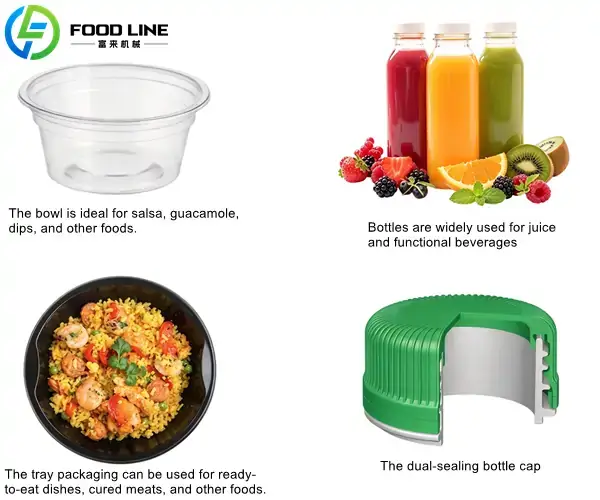
1. Bottles
Bottles are suitable for HPP beverages such as juices and smoothies.
Recommendations:
- Choose cylindrical or square bottles with rounded corners.
- Select bottles with simple sidewall designs and minimal protrusions.
- Choose PET or HDPE materials based on oxygen barrier requirements and packaging design.
2. Bottle Caps
Caps play a crucial role in preventing leaks during the HPP process.
Recommendations:
- Select caps featuring induction seals or double/triple seal structures validated through HPP testing.
- Verify the fit between the cap and the bottle neck.
- Consider using HDPE material if the closure design and application allow.
3. Cups and Bowls
Cups and bowls are suitable for dips, sauces, ready-to-eat meals, and other packaged products.
Recommendations:
- Choose round containers with sturdy rims.
- Utilize a robust rim structure to reduce stress on the top sealing film.
- Ensure sufficient headspace between the product and the sealing area.
- Consider using PP, PET, or HDPE materials based on specific application requirements.
4. Flexible Pouches
Flexible pouches are well-suited for HPP because they compress under pressure and return to their original shape upon decompression. They can also maximize the utilization of processing space.
Recommendations:
- Select flexible structures capable of withstanding compression.
- Use multi-layer composite films if the product requires high oxygen barrier properties.
- Consider materials such as LDPE, HDPE, EVOH, Nylon, PVdC, and suitable coated films.
- Avoid using paper layers that may absorb water or lose structural strength.
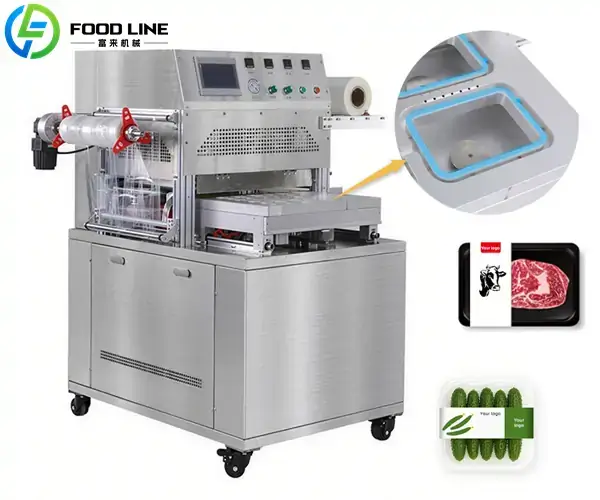
5. Trays
Trays are suitable for meat, seafood, ready-made meals, and other solid or semi-solid foods.
Recommendations:
- Select trays capable of withstanding compression and recovering their shape.
- Use lidding film with sufficient tensile strength to prevent permanent stretching or deformation.
- Consider vacuum packaging or skin packaging to minimize residual air inside the package.
- Evaluate materials such as CPET, EVOH composite structures, PET, HDPE, and PP based on the intended application.
How to Enhance HPP Packaging Performance
Material selection is just one part of the process. Fill height, package dimensions, and processing conditions also influence performance of packaging for HPP.
1. Minimize Headspace
Headspace refers to the gap between the product and the top of the package. During HPP processing, air in this space is compressed, placing additional stress on the container and seal areas.
Reducing headspace improves packaging performance and increases batch throughput. However, ensure the product does not come into contact with the sealing area to maintain seal integrity.
2. Check Seal Strength
Weak seals can lead to leaks, oxygen ingress, and product spoilage. Inspect seal areas and test the integrity of the finished package after HPP processing.
3. Test Materials Under HPP Conditions
Different types of plastics and multilayer films react differently to high pressure. Test sample packages under the intended pressure, hold time, and temperature conditions to check for leaks, deformation, seal damage, and changes in barrier properties.
4. Consider Sustainable Materials for HPP Packaging
Manufacturers may consider using recycled PET (rPET), recyclable plastics, and biodegradable materials such as polylactic acid (PLA). However, these materials must meet both HPP performance standards and food safety requirements.
Before selecting materials, evaluate their flexibility, water resistance, seal strength, and oxygen barrier properties. In addition, recycled materials must comply with the target market’s regulatory requirements for food-contact materials.
About Foodline Machinery
Foodline Machinery is a Chinese supplier, providing food processing equipment for industries such as nuts, meat, dairy, fruits and vegetables, and bakery products.
We offer HPP machines for various capacities, ranging from laboratory testing and pilot-scale production to commercial-scale food processing.
Our team can assist you in comparing equipment specifications, assessing processing requirements, and selecting the right high pressure processing machine for your production needs.