Home » Sushi Making Machine Line | Automatic Sushi Production Line
Sushi Making Machine Line | Automatic Sushi Production Line
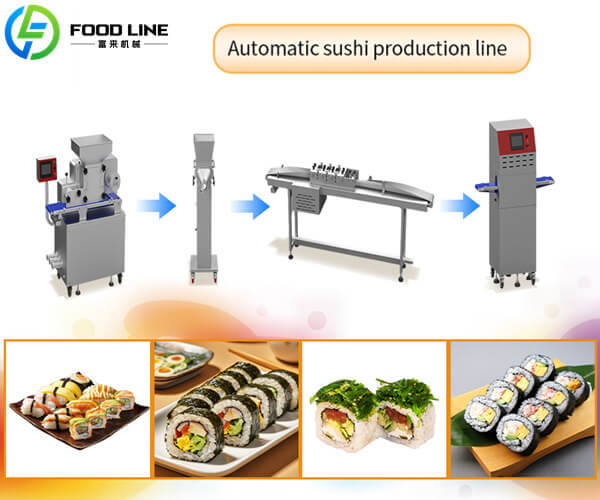
automatic sushi production line
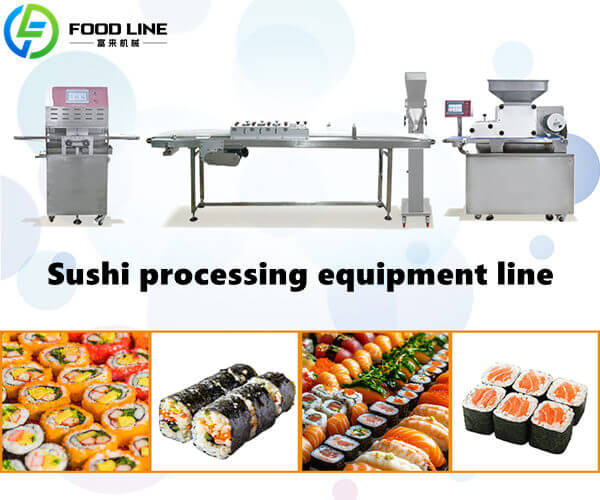
automatic sushi making machine line
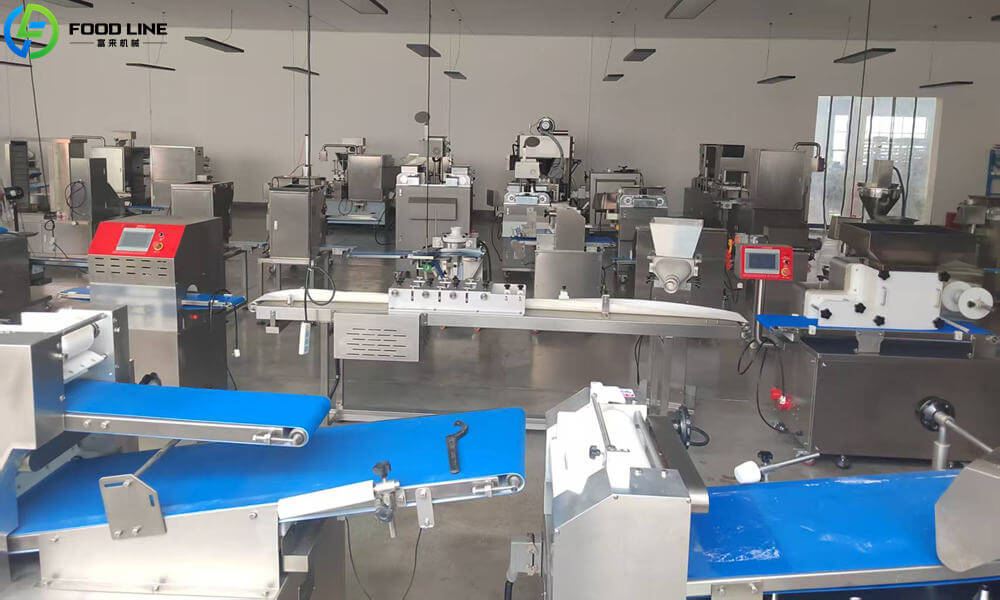
The sushi making machine line provides consistent output for sushi factories and central kitchens. This sushi processing line handles the whole process from rice to finished roll. It spreads the rice, adds fillings, rolls the sushi, and cuts each piece. It does the work of many hands, and does that work faster and more consistently. For factories looking to increase sushi production capacity, this sushi processing line integrates perfectly into continuous production layouts.
Contact us today to request our sushi production equipment price
Foodline Sushi Making Machine Line for Sale
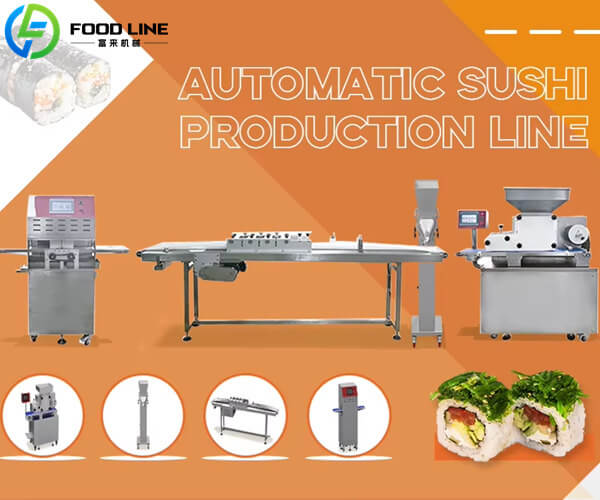
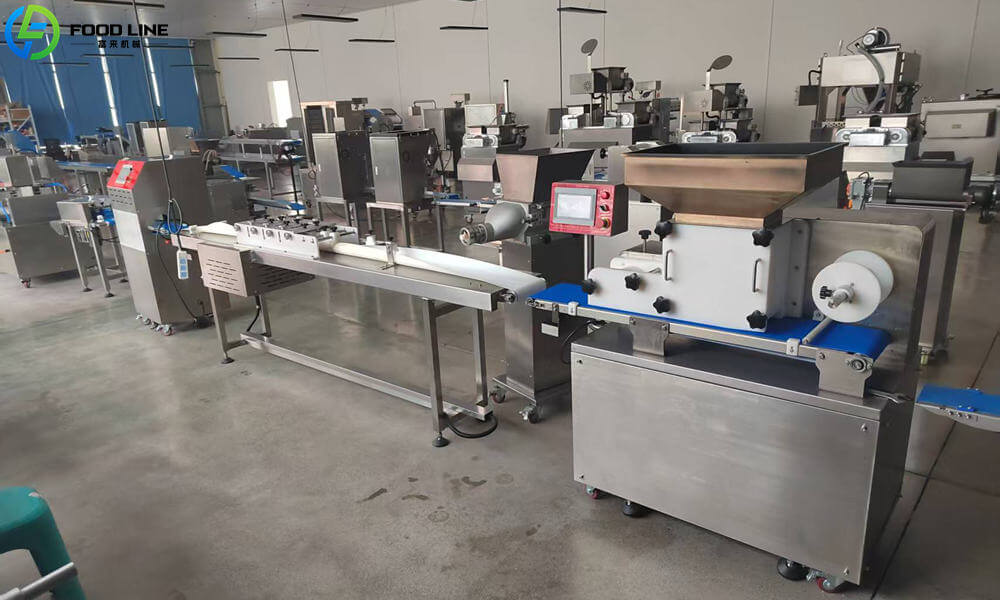
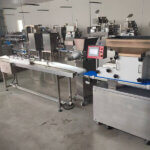
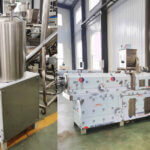
The sushi maker machine line is designed for large-scale manufacturing. It links multiple pieces of equipment into a unified workflow. Each stage handles a specific task in the sushi-making process.
Key structural components include:
Sushi base forming unit for shaping rice blocks
Filling unit for placing ingredients
Rolling unit for forming sushi rolls
Cutting unit for portion control
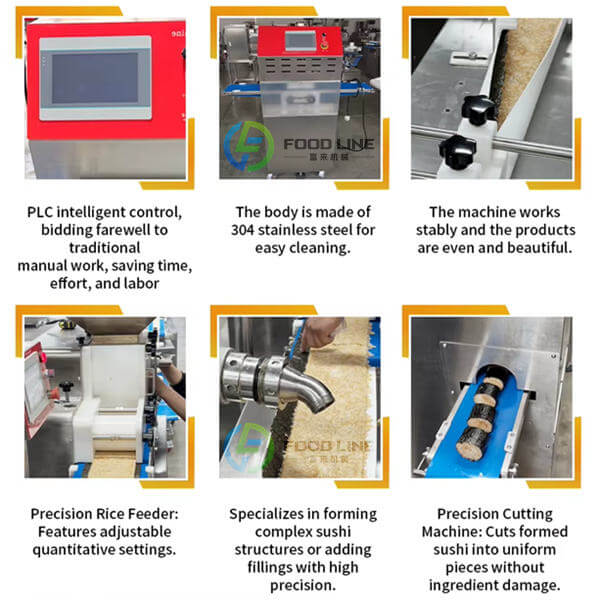
Operators can adjust parameters such as speed, weight, and cutting length via a PLC control system. The sushi rolls making machine maintains production stability during the long, continuous shifts common in food factories.
Ask for a Custom Sushi Production Line Solution
high speed sushi production line
high capacity sushi processing line
Specifications of Foodline Automatic Sushi Production Line
Item
Parameter
Sushi Size
Diameter adjustable from 40 mm to 60 mm
Capacity
70~100 pcs/min
Machine Dimension
5400 × 600 × 1500 mm
Power Supply
Single-phase AC 220V ±10%, 50Hz
Machine Weight
470 kg
Get Your Quote Before Prices Change
Full Process Flow from Rice to Packed Sushi
The sushi making line follows a clear sequence of operations, with each step seamlessly connecting to the next.
Process steps:
1. Rice preparation: Cook and prepare rice, then cool it to a stable temperature for safe handling and proper processing.
2. Sushi base formation: Press rice into uniform bases, preparing them for filling and rolling.
3. Ingredient placement: Place fillings such as fish, vegetables, or meat onto the rice base in specific positions.
4. Rolling process: Tightly roll the rice and fillings together to form sushi rolls.
5. Cutting process: Slice the sushi roll into equal pieces with controlled size and clean edges.
6. Packing and output: Arrange and package the finished sushi pieces for storage, transport, or sale.
Rice weight control stays stable through adjustable settings. Ingredient placement uses fixed feeding paths for even distribution. Cutting units divide rolls into equal pieces with fixed size control.
The sushi making equipment keeps output uniform across each batch. Product weight, shape, and appearance stay close across large production runs.
Inquire Now – We’ll Reply Within 24 Hours
industrial sushi processing equipment
Main Equipment in Industrial Sushi Manufacturing Line
There are four key devices in the automatic sushi maker machine line.
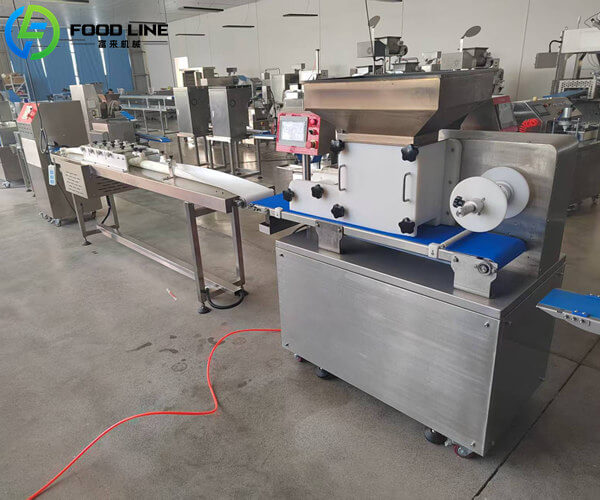
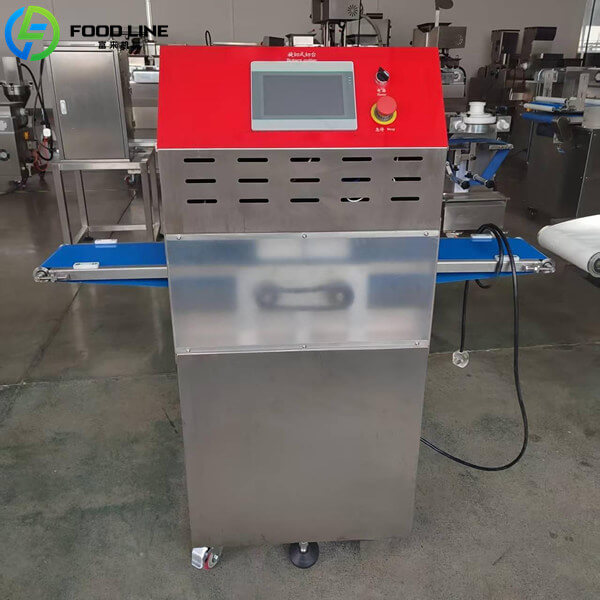
1. Sushi Rice Sheeting Machine It spreads cooked rice into a uniform sheet, and controls the thickness and width of the rice layer. The surface remains consistent, free of thin spots or thick clumps.
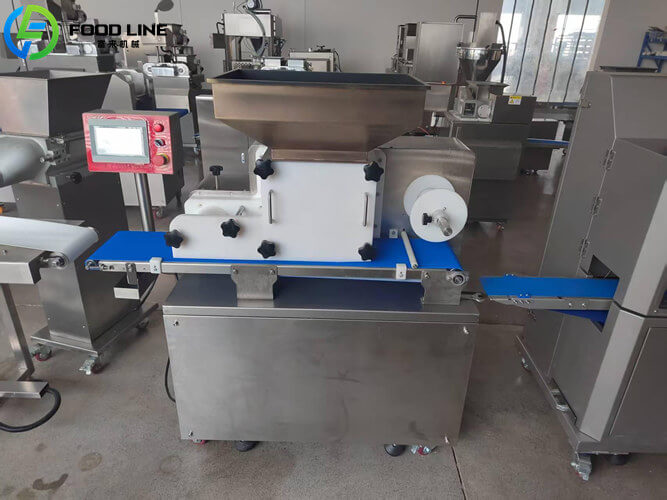
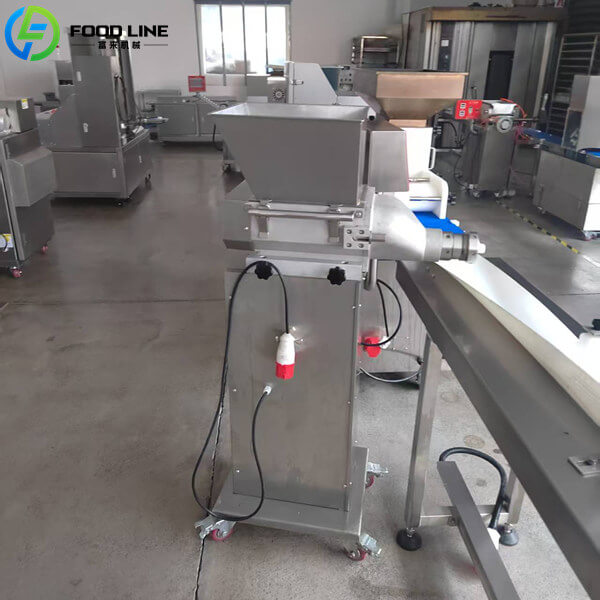
2. Filling Dispenser It deposits ingredients onto the rice sheet. It places the right amount of filling in the right position.
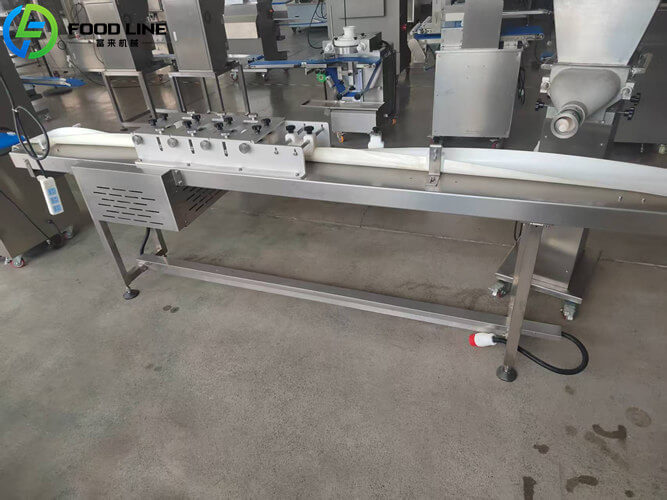
3. Sushi Rolling Machine It is responsible for creating sushi rolls. It rolls the rice and seaweed sheets into a cylindrical shape.
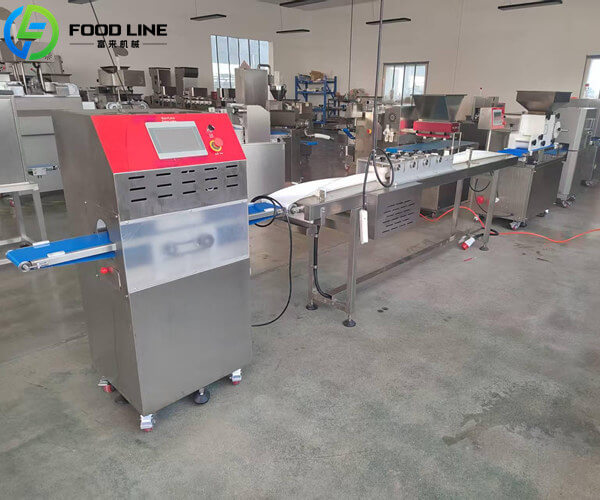
4. Rotary Cutting Machine It slices the roll into equal pieces. The blade rotates to make clean cuts. Each piece comes out the same size.
Our sushi making machine line integrates these units into a complete production line. Operators can adjust rice weight, conveyor speed, pressing force, and filling volume via a PLC control panel.
It ensures smooth product transfer between processing stages, minimizing operational interruptions between units.
Parameters of These Four Key Devices in Sushi Production System
Sushi Rice Sheeting Machine
Capacity: 7–10 meters per minute Product Size: Width adjustable 120–170 mm Power Supply: Single-phase AC 220V ±10%, 50Hz Power Consumption: Approx. 660W Machine Weight: 270 kg Machine Dimension:1370×600×1455 mm
Filling Dispenser
Power Supply: Single-phase AC 220V ±10%, 50Hz Power Consumption: Approx. 200W Machine Weight: 110 kg Machine Dimension: 765×457×1268 mm
Sushi Rolling Machine
Capacity: 7–10 meters per minute Product Size: Diameter adjustable 40–60 mm Power Supply: Single-phase AC 220V ±10%, 50Hz Power Consumption: Approx. 400W Machine Weight: 120 kg Machine Dimension: 2950×520×1045 mm
Rotary Cutting Machine
Capacity: 70–100 pieces per minute Product Size: Adjustable length Power Supply: Single-phase AC 220V ±10%, 50Hz Power Consumption: Approx. 580W Machine Weight: 120 kg Machine Dimension: 1160×475×1310 mm
Reserve Your Production Line Slot Today
Key Features of Foodline Sushi Making Machine Line
Each sushi piece uses the same rice weight, so every batch looks and tastes the same.
Ingredients spread evenly for a balanced bite and clean appearance.
Shaped and cut with fixed steps, so size and form stay uniform.
Operators can set rice weight, belt speed, pressure, and cutting length as needed.
The line runs for long hours without stop, fitting large orders with ease.
Output per hour beats hand-making by far, covering peak demand.
A PLC screen shows all settings clearly, and changes take effect right away.
sushi maker machines
Sushi processing equipment line helps factories build a more organized production flow. It supports stable output for daily supply and large orders, and also gives more control over product standards. Many food businesses use a sushi production line to move from small batch production to factory-level capacity.
Food factory investors looking to incorporate sushi rolls into their product lines
Restaurant groups planning to shift to factory-based sushi production to supply their multiple outlets
Aviation and railway catering companies responsible for large-scale bento box production
labor saving sushi manufacturing system
These businesses often face challenges such as high order volumes, tight delivery schedules, and the need for strict product standardization. Sushi manufacturing systems meet their requirements for stable output and standardized production planning.
Q1: What diameter of sushi can this sushi production line produce?
It can produce sushi with a diameter ranging from 40 to 60 mm.
Q2: What types of fillings can be used?
It supports a variety of fillings, including granular ingredients, meat pastes, chicken chunks, and meat floss.
Q3: What are the requirements for granular fillings?
Granules need some binding so they do not fall apart easily. Particle size should stay below 15 mm, and smaller sizes work better for stable feeding and forming.
Free Quote! WhatsApp/Tel/WeChat: +86 17837195753
plc controlled sushi making equipment line
Foodline Machinery: Provider of Food Processing Solutions
We use cookies to ensure that we give you the best experience on our website. If you continue to use this site we will assume that you are happy with it.