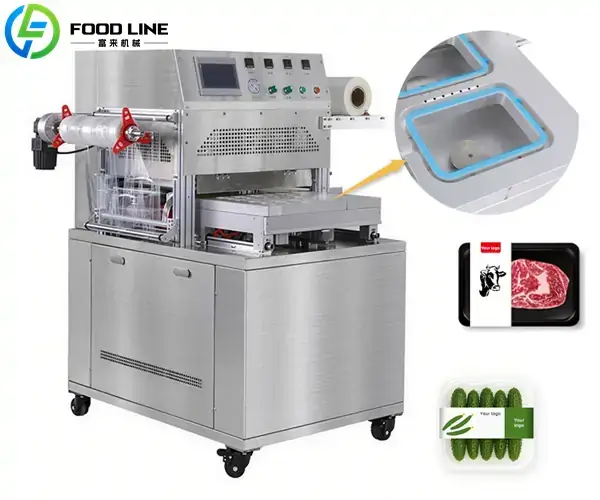
Are you looking for a packaging method that preserves food freshness while ensuring an attractive shelf display? Our MAP tray sealer is designed to do exactly that. This modified atmosphere packaging machine seals food products in pre-formed trays using a top film within a controlled gas environment. performs the processes of air evacuation, protective gas flushing, and tray sealing within a single packaging cycle. The finished package not only offers excellent product visibility but also slows down quality degradation during storage. Meat processors, seafood plants, central kitchens, and food factories worldwide rely on this MAP machine for their daily operations.
Inquire Now – We’ll Reply Within 24 Hours
Foodline MAP Tray Sealer for Sale
Max. Film Width (mm)
440
Max. Film Diameter (mm)
220
Packaging Speed (times/min)
5–6
Capacity (boxes/hour, 4-out)
≈1200
Power Supply (V/Hz)
220/50
Total Power (kW)
2.1
Working Air Pressure (MPa)
0.6–0.8
Machine Weight (kg)
≈115
Machine Dimensions (mm)
1105×1090×705
Max. Tray Size (mm), 4-out
218×175×45 (×4)
We offer a full range of MAP tray sealer machines. Contact us to secure your limited-time deal.
automatic modified atmosphere packaging machine for sale
How the MAP Tray Sealing Machine Works
Step 1: Product Filling
Food is placed into the trays either manually or via an upstream
Step 2: Tray Loading
The loaded trays move into the sealing station.
Step 3: Gas Flushing
This is the critical step. The machine evacuates the existing air from the tray and injects a protective gas mixture. Common gases include CO₂, N₂, and O₂. The specific gas ratio depends on the food type, packaging material, and desired shelf life.
Step 4: Heat Sealing
The film is heated and pressed onto the tray edge. Sealing temperature, pressure, and time are adjustable to ensure a tight, reliable seal for every tray.
Step 5: Film Cutting and Output
The machine trims the excess film from around the tray. The sealed tray is then discharged, ready for labeling and shipment.
Get Your Best Price Today – Fill Out Our Quick Form Complete a 2-minute form and receive a competitive quote for your MAP Machine
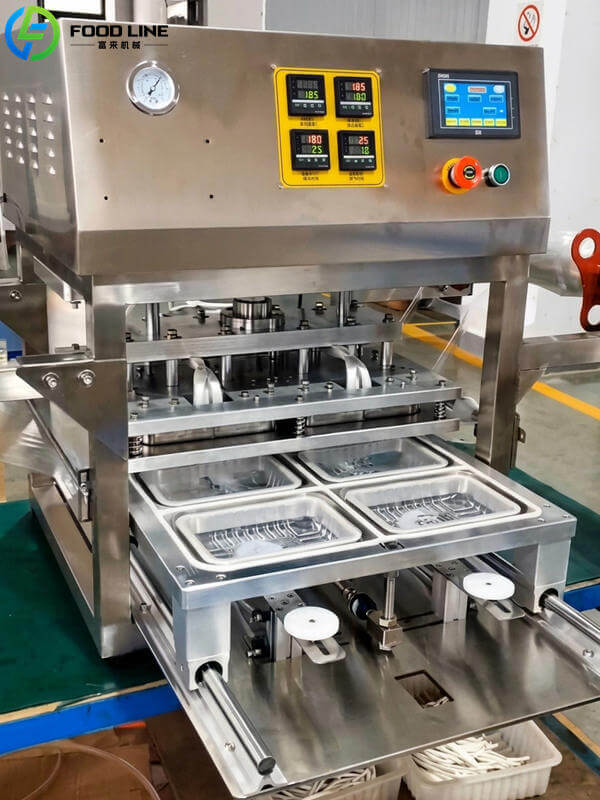
MAP food packaging machine seals 4 trays per cycle
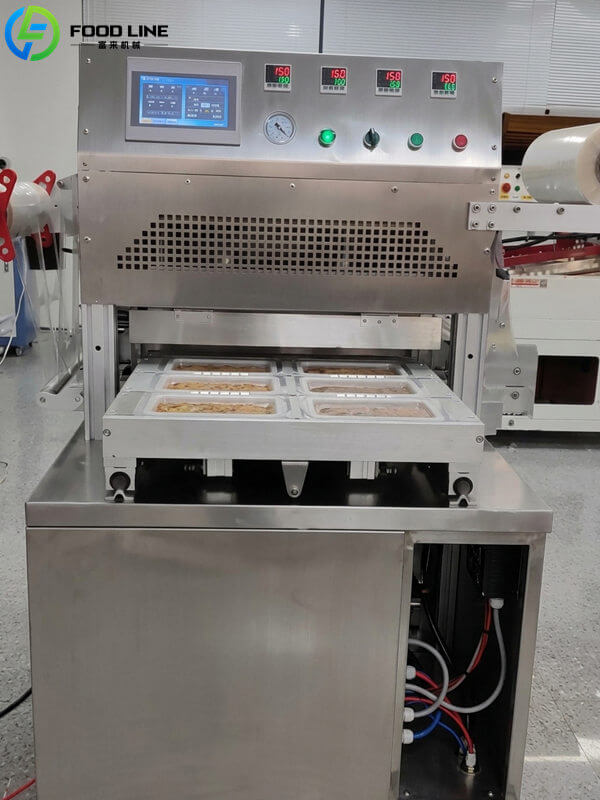
6-station MAP sealing machine
Highlights of Our Modified Atmosphere Tray Sealer
1. MAP Packaging and Tray Sealing in One Machine
The MAP tray sealer integrates gas flushing and heat sealing into a single unit. Once the product is placed in the tray, the machine completes the gas treatment and film sealing
2. Adjustable MAP Packaging Parameters
Parameters such as vacuuming, gas flushing, sealing time, and sealing temperature can be adjusted based on different products and packaging requirements.
3. Automatic Gas Flushing
After the tray enters the sealing area, the MAP tray sealer machine evacuates the internal air or replaces it with a protective gas before sealing.
4. Reliable Heat Sealing
The heated sealing mold presses the top film onto the tray rim to form a secure seal.
5. Support for Various Packaging Films
Sealing films can be selected based on tray material and packaging requirements, with corresponding sealing parameters adjusted accordingly.
6. Integration with Other Packaging Equipment
The MAP tray sealing machine can work with weighing, conveying, labeling, coding, and inspection equipment to form a complete food packaging line.
Upgrade Your Packaging Line – Request a Quote
map machine sealing 4 trays at once
MAP Tray Sealing vs. Normal Tray Sealing
While both types of equipment utilize trays and top film, the packaging processes differ.
Standard tray sealing
The basic process is: Tray + Product → Film sealing
The standard tray sealer primarily focuses on sealing the tray with a top film.
MAP tray sealing
The process is: Tray + Product → Evacuation/Gas replacement → Protective gas injection → Film sealing
The MAP tray sealer controls the internal gas atmosphere prior to sealing the tray.
Consequently, standard tray sealing focuses primarily on packaging and sealing. MAP tray sealing incorporates an additional step of gas atmosphere control into the packaging process. This additional step reduces the amount of ambient air in the tray and creates an internal environment that helps preserve freshness.
If your products are sensitive to air—such as fresh meat, seafood, or pre-cut produce—then a MAP tray sealer is the ideal choice.
Send an Inquiry to Get a Detailed Quote
2-tray per cycle modified atmosphere packaging machine
4-tray per cycle modified atmosphere packaging equipment
What Products Can a MAP Tray Packaging Machine Pack?
For food manufacturers, the packaging process involves more than just sealing a tray. The final package must meet the needs of various stages, including storage, transportation, retail display, and consumer use.
Better Product Presentation
The transparent top film and the rigid tray directly display the food. Shoppers can see the food before purchasing. This design is suitable for supermarkets, retailers, convenience stores and food manufacturers.
Longer Freshness
By modifying the gas composition inside the tray, MAP packaging delays discoloration, off-odor development, and moisture loss in many food products.
Less Air Exposure
Sealed trays minimize direct contact between the food and ambient air—a crucial factor for refrigerated products.
Better Retail Packaging
The tray surface accommodates product labels, barcodes, nutritional information, expiration dates, and branding. This makes the format a favorite among food manufacturers and central kitchens.
Packaging Meat or Poultry? Get a Machine Built for Protein Preserve color, juice, and texture. Send your product details.
FAQs
Q1: What gases are used in MAP packaging?
The most commonly used gases are carbon dioxide (CO₂), nitrogen (N₂), and oxygen (O₂). CO₂ inhibits bacterial growth; N₂ fills the headspace and maintains the package’s shape; and O₂ helps preserve the red color of fresh meat.
Q2: How long is the shelf life with MAP?
It depends on the food type and storage temperature. Compared to standard sealed packaging, the shelf life of many refrigerated meat and seafood products can be extended by several days.
Q3: Does a MAP tray sealer always require a vacuum process?
Not necessarily. Some machines use a vacuum-and-gas-filling process, while others use gas flushing to replace the air inside the tray.
Q4: Can one MAP tray sealer machine seal multiple trays at the same time?
Yes. Our best-selling machines can seal 2 or 4 trays at a time.
Looking for a Long-Term Packaging Partner? Let’s Connect Equipment, consumables, support – let’s build a relationship.
Foodline Machinery — Your Trusted Packaging Equipment Partner
Foodline Machinery is a manufacturer of food packaging equipment with extensive export experience. We supply a wide range of food processing and packaging machinery—including modified atmosphere packaging machines, vacuum packaging machines, vertical form-fill-seal machines, and flow wrapper machines—to clients across Europe, the Americas, the Middle East, Southeast Asia, and beyond.
Interested in our MAP tray sealer price? Contact us today with details about your food type and daily production volume. Our sales team will respond within 24 hours with a detailed proposal and quotation.
We use cookies to ensure that we give you the best experience on our website. If you continue to use this site we will assume that you are happy with it.