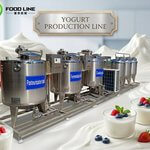
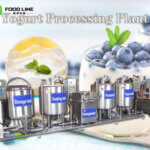
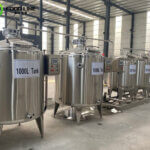
Yogurt production lines handle milk, yogurt, starter cultures, and other dairy ingredients on a daily basis. After production, product residues may remain inside tanks, pipelines, pumps, and valves. A CIP system cleans these internal surfaces by circulating water and cleaning solutions. Operators can clean the equipment in situ without dismantling the entire production line.
CIP stands for “Clean-in-Place.” A CIP system is a cleaning unit designed specifically for food processing equipment.
In a yogurt production line, this clean in place system delivers cleaning solutions to storage tanks, pipelines, pumps, valves, and other product-contact components. These solutions reach internal surfaces to remove product residues.
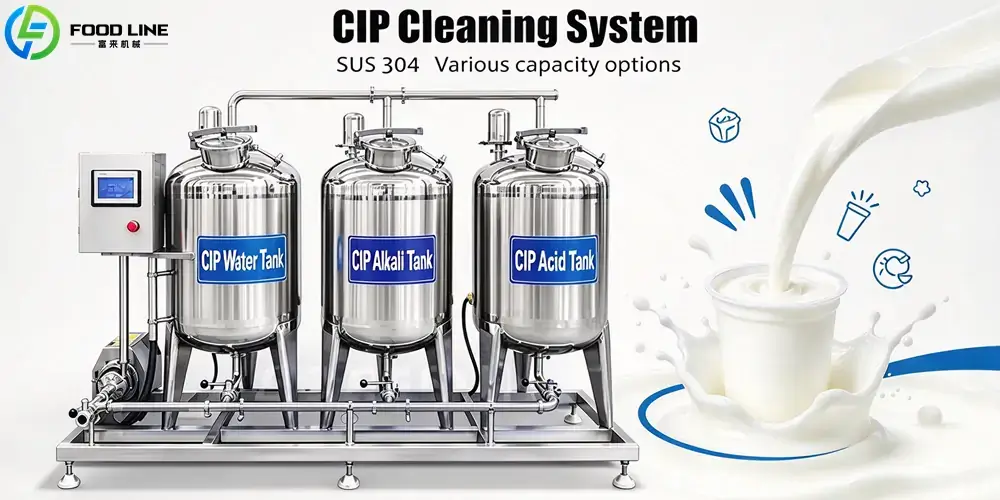
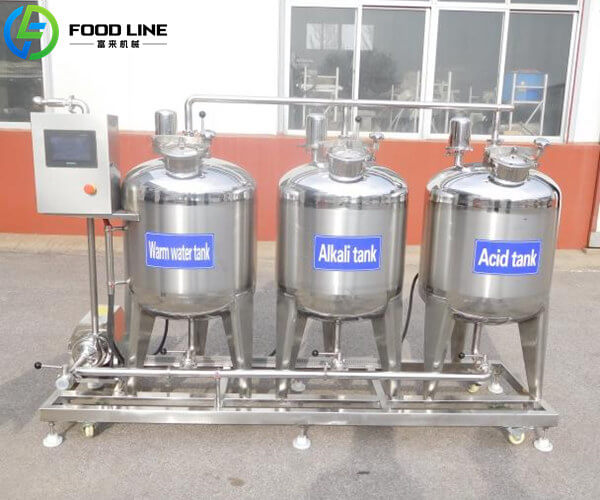
The CIP systems may include:
Water tanks
Alkaline cleaning tanks
Acid cleaning tanks
Cleaning pumps
Valves
Piping
Control panels
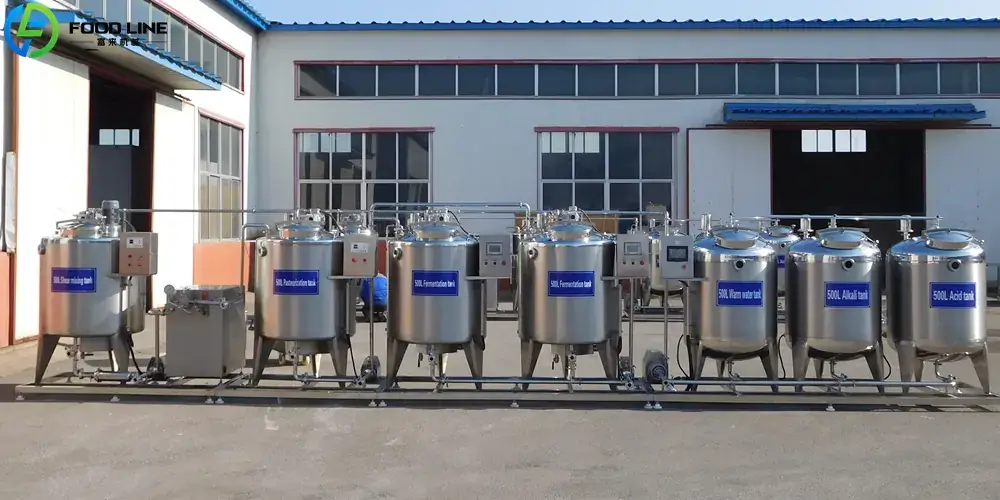
Specific configurations vary depending on production capacity and equipment layout.
Why Is CIP Cleaning System Necessary for Yogurt Production
1. Removing Milk and Yogurt Residues
Milk and yogurt leave behind fats, proteins, sugars, and other residues inside yogurt production equipment. CIP cleaning systems utilize various cleaning stages to remove these deposits.
2. Cleaning Tanks and Pipelines
Yogurt making machine lines comprise numerous interconnected tanks, pipelines, pumps, and valves. CIP equipment circulates cleaning solutions through these components, allowing operators to clean the equipment’s interior via a single, streamlined process.
3. Reducing Manual Cleaning
Manual cleaning often requires workers to open tanks and disassemble equipment components. Implementing a CIP system reduces this labor-intensive work, making daily cleaning easier and more convenient.
4. Ensuring Production Hygiene
As yogurt is a dairy product, maintaining the cleanliness of surfaces that come into contact with the product is crucial. Regular CIP cleaning helps remove residues from the previous production cycle and keeps processing equipment clean and sanitary.
200L cip tank cleaning system for milk beverage beer
How Does Clean in Place Equipment Work?
A standard CIP cycle typically involves the following steps:
Water pre-rinse
Alkaline wash
Water rinse
Acid wash
Final rinse
CIP pumps deliver cleaning solutions to tanks, pipelines, pumps, and valves. A heating system regulates the cleaning temperature, while a control panel manages the cleaning sequence and cycle times.
The specific cleaning process depends on the yogurt production line configuration and the type of residue present.
Foodline is a manufacturer and supplier of food processing equipment based in China. We provide yogurt production lines and related dairy processing equipment to clients with varying production capacity needs.
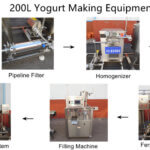
Our yogurt production equipment includes milk storage tanks, pasteurization tanks, homogenizers, fermentation tanks, yogurt filling machines, and CIP systems. We can flexibly adjust equipment configurations based on specific production processes and plant layouts.
Contact Foodline to Plan Your CIP System and Yogurt Production Line
Share your yogurt production capacity, processing workflow, and specific plant requirements. Our team will recommend a suitable CIP cleaning machine, provide detailed equipment information, and assist in planning a cleaning solution for your yogurt production line.
We use cookies to ensure that we give you the best experience on our website. If you continue to use this site we will assume that you are happy with it.