One of the most common challenges food processing manufacturers face when upgrading or building a new automated packaging production line is choosing between vertical packaging machine (VFFS) and horizontal packaging machine (HFFS). Both types of equipment offer fully automated forming, filling, and sealing functions, but their operating principles are significantly different, and they are suitable for different packaging scenarios. Choosing the wrong model can lead to low production efficiency, high product breakage rates, material waste, and unnecessary cost losses.
In this guide, we will detail the core definitions, operating principles, main advantages and disadvantages, and key differences between vertical and horizontal packaging machines to help you choose the ideal packaging equipment based on your specific product and factory conditions.
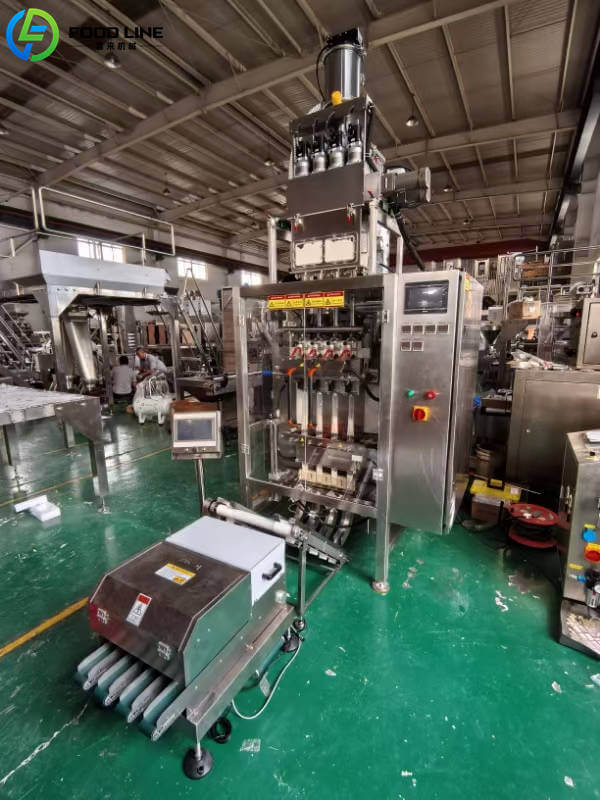
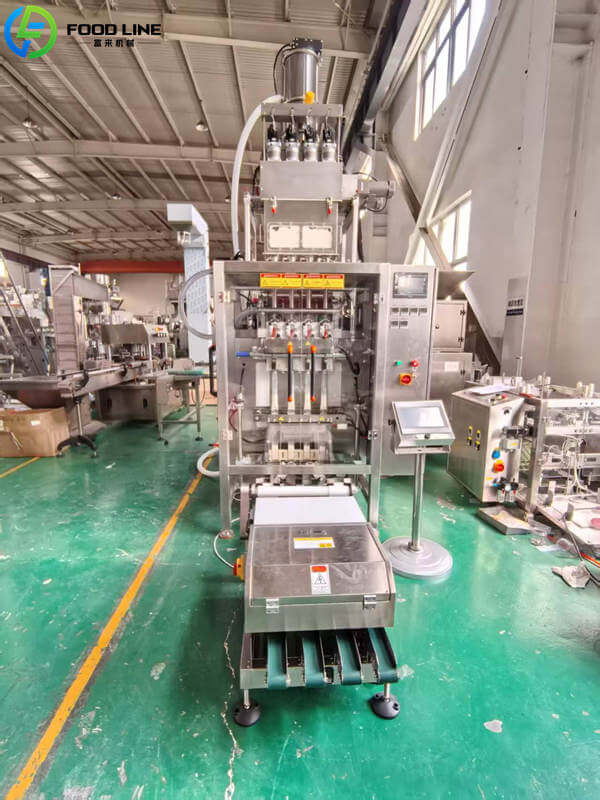
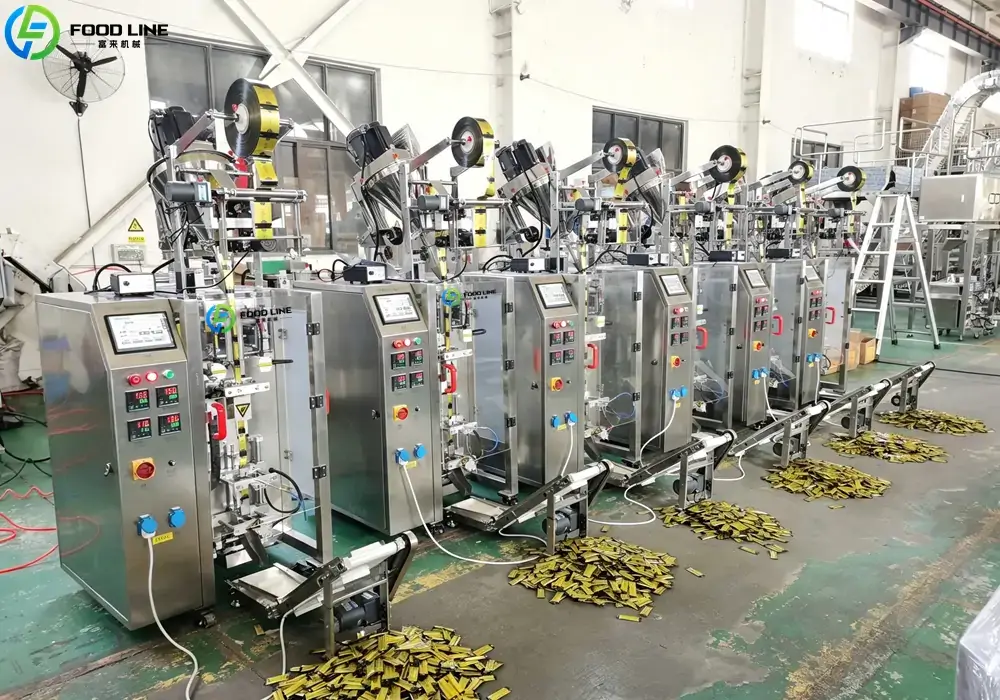
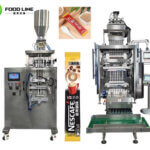
The vertical packing machine, also called vertical formfillseal machine (VFFS machine), is a compact, automated packaging solution for high-speed packaging of free-flowing products. Its overall structure is vertical, with the packaging film passing vertically downwards through the forming collar to form a tubular packaging bag.
The entire packaging process relies on gravity feeding: material falls vertically from the top metering system into the forming film tube. The machine automatically completes bottom sealing, side sealing, top sealing, and cutting. It completes the packaging in a continuous cycle.
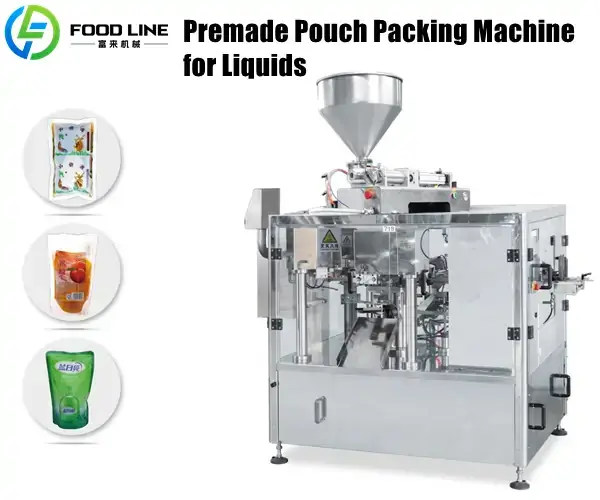
This VFFS packaging machine supports mainstream simple bag types, including three-side sealed bags, four-side sealed bags, back-sealed bags, and stand-up pouches. It is perfectly suited for granular materials, powders, liquids, and bulk snacks such as nuts, rice, coffee powder, spices, and frozen granular foods.
Due to its vertical structure design, the vertical packaging machine has a small footprint and can be seamlessly integrated with multi-head weighers, volumetric cup fillers, and liquid filling systems. It is an economical choice for high-volume production of bulk materials.
Unlike vertical packaging machines, the horizontal packing machine operates using a horizontal conveyor system. The packaging film is advanced horizontally, and the product is stably placed on the conveyor belt and smoothly transported forward, rather than relying on gravity to fall.
During the process, the film horizontally wraps the fixed-shape product, completing processes such as sealing, trimming, and cutting to ultimately finish the packaging. This horizontal feeding and packaging method avoids the impact of vertical drops, providing gentle protection for the product.
Horizontal flow packaging machines are particularly adept at packaging fixed-shape, fragile, and irregularly shaped solid products. They primarily support pillow-type packaging bags, and achieve a consistent, neat, and completely sealed packaging effect. Common applicable products include baked goods, cookies, chocolate bars, soaps, medical supplies, and various rigid single-item products that cannot withstand drops or compression.
Advantages and Disadvantages of Vertical Packaging Equipment
Advantages:
Space-saving design: The vertical structure significantly saves workshop space, making it ideal for small and medium-sized factories with limited floor space.
Low overall cost: Low purchase price, simple structure, few vulnerable parts, and low daily maintenance and operating costs.
High efficiency for bulk materials: Gravity feeding ensures continuous and stable feeding, providing high packaging efficiency for powders, granules, and liquids.
Strong compatibility: Easily integrates with various automatic metering equipment, enabling fully unmanned and automated packaging production.
Disadvantages:
Not suitable for fragile or easily deformable solid products; vertical drops can cause product damage and defects.
Changing the packaging bag width requires changing the forming tube, limiting packaging adjustment capabilities.
Installation requires a certain workshop ceiling height, making it unsuitable for factories with very low floor levels.
Advantages and Disadvantages of Horizontal Packaging Equipment
Advantages:
Gentle product protection: Horizontal conveyor feeding avoids drops and compression, effectively protecting fragile products such as pastries and chocolates.
Diverse Packaging Capabilities: Supports various complex and high-end packaging bag types and multi-piece combination packaging, meeting the customized packaging needs of the high-end market.
Stable Product Positioning: Capable of precisely fixing and packaging irregularly shaped products, with strong production adaptability.
Easy Production Inspection: The open horizontal conveyor structure facilitates real-time manual inspection and equipment debugging.
Disadvantages:
Large footprint, requiring sufficient workshop space for layout.
Poor packaging effect for powdery and granular bulk materials, prone to material spillage and leakage.
Get customized packaging production line solutions from Foodline
Choosing the right packaging machine is key to improving productivity and product competitiveness. As a professional food processing machinery manufacturer with extensive industry experience, Foodline specializes in designing and manufacturing high-performance packaging machines, including vertical form seal machine and horizontal flow wrapper machine for the food industry.
We offer one-stop customized packaging solutions, covering equipment selection, production line layout, personalization, installation, commissioning, and after-sales maintenance. Our professional engineering team can match you with the most cost-effective solution based on your product characteristics, workshop conditions, and production requirements.
Avoid blind investment and production losses. Contact Foodline today for a free professional vertical packaging machine consultation and customized equipment quote!
We use cookies to ensure that we give you the best experience on our website. If you continue to use this site we will assume that you are happy with it.