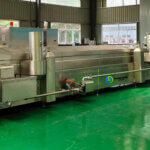
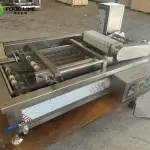
For any food processing plant planning to increase its frying capacity, selecting the right continuous oil fryer is a critical step. The machine must align with your product, required output, frying temperature, frying duration, heating method, and available production space. A fryer that is well-suited for one type of food may not be appropriate for another. This guide outlines 10 key factors to evaluate before purchasing a continuous frying machine.
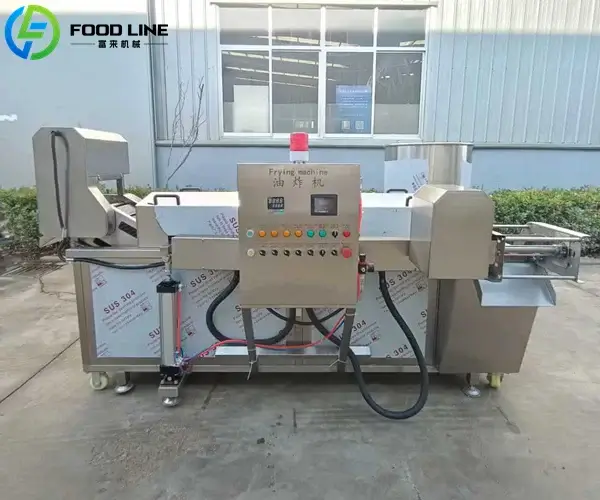
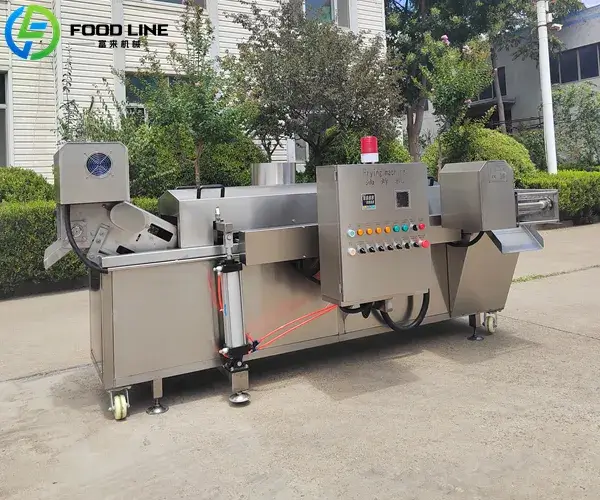
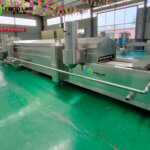
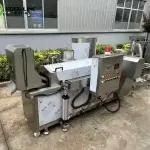
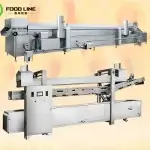
A continuous fryer is a type of industrial frying equipment. It uses a mesh belt system to keep food moving continuously through heated oil. Unlike batch-processing methods that involve loading and unloading in batches, products enter the frying zone, remain in the hot oil for a preset time, and then exit the continuous frying equipment to proceed to the next processing step.
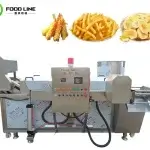
This type of fryer machine is commonly used in large-scale food production. It can be used to process a wide variety of foods, such as potato chips, French fries, banana chips, vegetable crisps, nuts, chicken products, fish products, spring rolls, and other types of fried foods.
The main advantage of continuous frying is its ability to maintain a consistent and stable production process. However, the selected equipment must still be tailored to the specific product and production requirements.
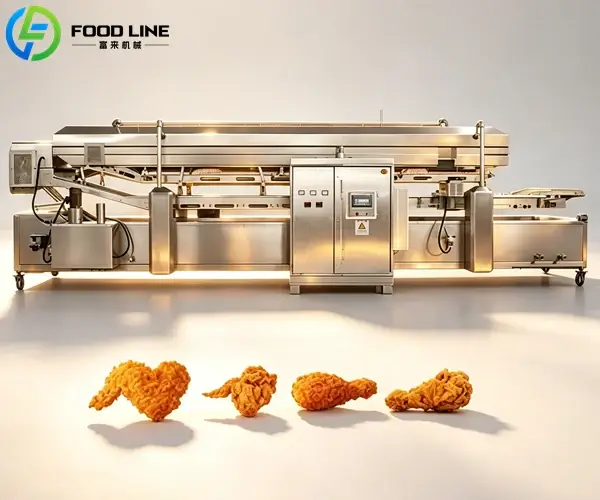
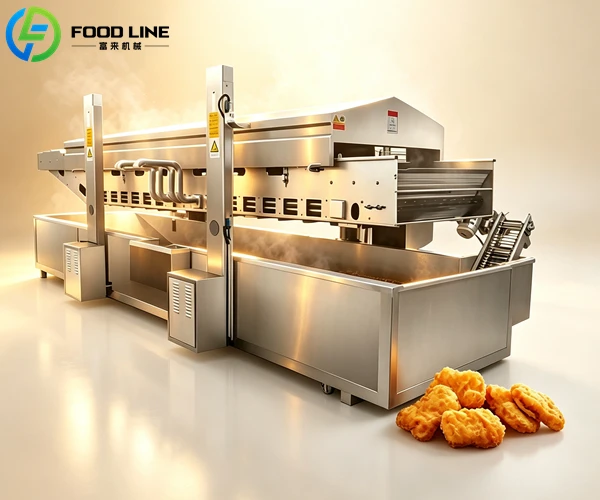
continuous fryer machine for large scale food production
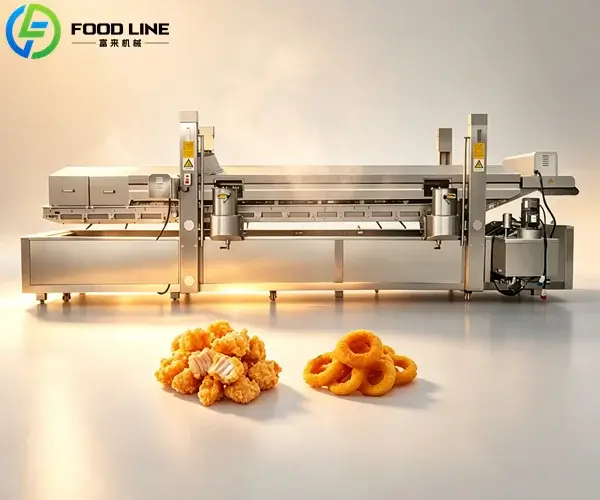
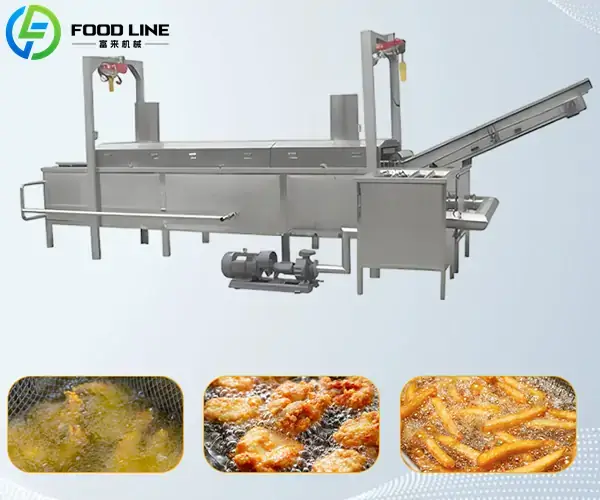
continuous frying equipment for snack food
How to Choose the Right Continuous Oil Fryer for Your Business
1. First, Determine the Food You Need to Fry
When selecting an automatic continuous fryer, the first factor to consider should be the food itself. Different foods have different frying requirements. For example, potato chips, French fries, banana chips, vegetable slices, nuts, chicken products, fish products, and spring rolls may require different temperatures, frying times, and conveyor belt settings.
Before contacting a supplier, please have the following product information ready:
Product name
Product dimensions and thickness
State (fresh or frozen)
Moisture content (if applicable)
Required frying temperature
Required frying duration
Target color and texture
The more detailed the product information you provide, the easier it will be to select the appropriate frying equipment.
Production capacity is one of the most important factors to consider when selecting a continuous oil fryer.
First, calculate the amount of product you need to process per hour. For example, if your facility needs to produce 2,400 kilograms of fried food during an 8-hour workday: 2,400 kilograms ÷ 8 hours = 300 kilograms/hour. In this case, a machine with a capacity of approximately 300 kilograms/hour could be a good starting point for your selection.
Do not base your selection solely on a machine’s maximum rated capacity. Your actual output will be influenced by product size, feed rate, frying time, oil temperature, and production schedules.
A machine with insufficient capacity may become a production bottleneck. On the other hand, a fryer with excessive capacity may take up more space and require an investment that exceeds your production needs.
When comparing continuous oil fryers, check whether the nominal capacity refers to actual product output or other metrics.
Frying temperature and time directly affect the quality of the final product. A good industrial frying process requires striking the right balance between these two factors. Higher temperatures do not always result in faster or better frying results. If the temperature is too high, the product’s surface may become overly browned before the interior reaches the desired state.
Frying time is also critical. The product must remain in the oil long enough to achieve the desired texture and doneness.
When selecting a continuous oil fryer, check the following points:
Temperature adjustment range
Temperature control method
Conveyor belt speed adjustment
Length of the frying zone
Product dwell time
Oil temperature stability
If you already have a proven frying process, provide the supplier with your current frying temperatures and times. This information will help verify the machine’s configuration.
The heating method is another important factor in industrial frying. Electric and gas heating are two common options. Your choice should be based on your facility’s energy supply, local energy costs, installation conditions, and production requirements.
For facilities with an adequate power supply that require direct temperature control, an electric-heated continuous fryer may be a practical choice. Before placing an order, please confirm the local voltage, frequency, and available power capacity.
For example, the supplier may need to know whether your facility uses:
220V or 380V
50Hz or 60Hz
Single-phase or three-phase power
Local electrical standards
The total installed power should also be verified against the facility’s electrical capacity.
A continuous oil fryer requires more installation space than a small batch fryer because products move through the frying zone via a mesh belt.
Before purchasing, measure the available production area and check the machine’s:
Length
Width
Height
Feed height
Discharge height
Control cabinet location
Maintenance space
Do not measure only the machine itself. Operators need sufficient space to load the machine, collect the fried products, clean the equipment, and perform maintenance.
You should also consider how the continuous fryer machine will connect to other machines. For example, the fryer can be connected to a blanching machine, a dehydrator, a seasoning system, a cooling conveyor, or a packaging line. The complete production process should align with the factory layout.
6. Evaluate the Oil Filtration and Circulation System
Oil management is critical during continuous frying. During production, tiny food particles and debris may enter the frying oil. If these residues remain in the oil for an extended period, they will not only affect the frying results but also increase the frequency of oil changes.
When evaluating the industrial continuous oil fryer, be sure to understand how the machine circulates and filters the oil. Key Considerations:
How the frying oil is circulated
How food particles are removed
How the oil is filtered
How the oil is drained
Ease of cleaning the filtration system
A well-designed filtration system helps maintain the stability of the frying process during extended production runs.
The mesh belt system is one of the core components of a continuous oil fryer. It determines how products move through the frying zone. Mesh belt speed directly affects the residence time of food in the oil and must therefore be matched to the required frying process.
Depending on the specific product and equipment design, you may need to pay attention to the following aspects:
Mesh belt speed
Frying depth
Product feed method
Product discharge method
Conveyor belt material
Product behavior within the frying zone
Some products require full immersion in oil, while others may require a different conveyor layout. For this reason, the supplier must fully understand your product characteristics before finalizing the equipment configuration.
If the continuous oil fryer is to operate for several hours each day, it must be designed for easy cleaning and maintenance.
Before purchasing, confirm how operators will clean the following areas:
Oil tank
Conveyor system
Oil filter
Heating components
Feed zone
Discharge zone
You should also understand which components require regular inspection or replacement. If the main working areas are easily accessible, this not only reduces cleaning time but also makes daily operations more convenient.
For food processing plants, cleaning and maintenance should be factored into the equipment selection process, rather than addressed only after installation is complete.
A continuous oil fryer does not operate in isolation; it must be compatible with your plant’s power supply, facility layout, production processes, and supporting equipment.
Before placing an order, please confirm the following information:
Local voltage
Frequency
Available power capacity
Installation space
Product feed method
Product discharge method
Connections to upstream and downstream equipment
If you are adding the continuous oil fryer to an existing production line, please provide photos, videos, or layout diagrams of the existing line. This information helps the equipment supplier understand how the new fryer will integrate with your existing equipment.
10. Compare Total Cost of Ownership of a Continuous Oil Fryer
While the purchase price is certainly important, it should not be the sole factor in your decision-making process. Two industrial fryers with similar purchase prices may have different operating costs. When comparing equipment, consider the following aspects:
Equipment purchase price
Heating power
Oil consumption
Labor requirements
Cleaning time
Replacement parts
Maintenance
Expected output
For example, if a piece of equipment has a lower purchase price but higher energy consumption or requires more manual labor during production, it may not necessarily be the most economical choice. Before making a final decision, please comprehensively evaluate the equipment’s purchase price and its expected operating costs.
Prepare Relevant Information Before Contacting Suppliers for Buying Continuous Oil Fryer
Preparing production-related information in advance can help you save time during the quoting process.
Suppliers typically need to know the following:
What foods do you plan to fry?
What are the product dimensions?
What is the required output (kg/hour)?
Are the products fresh or frozen?
What is your frying temperature?
How long does the frying process take?
Which heating method do you prefer?
What are the voltage and frequency in your area?
How much installation space is available?
Do you already have an existing production line?
If the frying process has already been tested, providing the existing process parameters will help make the discussion more targeted. For new products, providing product samples or product videos can also help suppliers better understand your
Select a Continuous Oil Fryer Based on Actual Production Needs
The right continuous oil fryer should be tailored to your product, production volume, frying process, heating method, facility space, and production line. Never choose equipment based solely on production capacity or price.
Foodline Machinery manufactures continuous fryers in a variety of capacities and sizes. Our machines are suitable for a wide range of food processing applications. We can discuss your products, target output, frying requirements, energy supply, and facility conditions in detail to determine the equipment specifications best suited for your project. Feel free to send us your production requirements to receive a quote for continuous oil fryer.
We use cookies to ensure that we give you the best experience on our website. If you continue to use this site we will assume that you are happy with it.