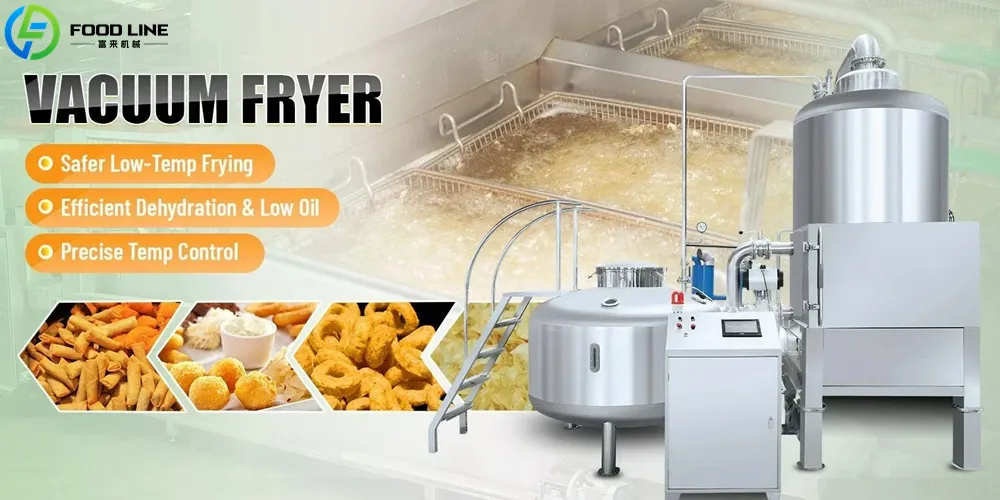
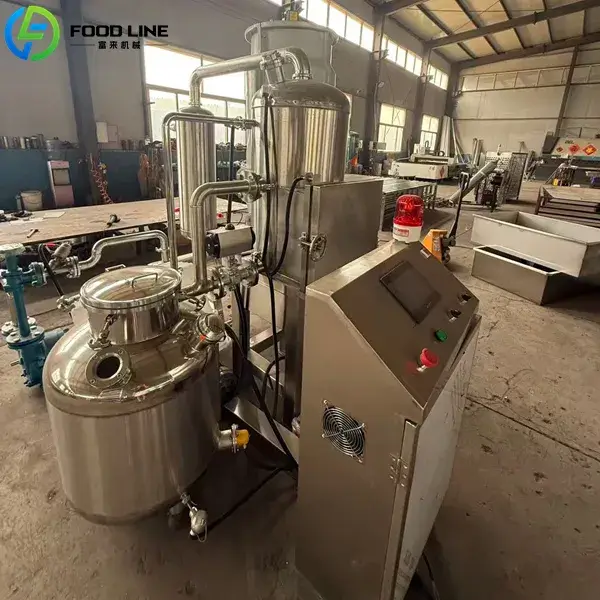
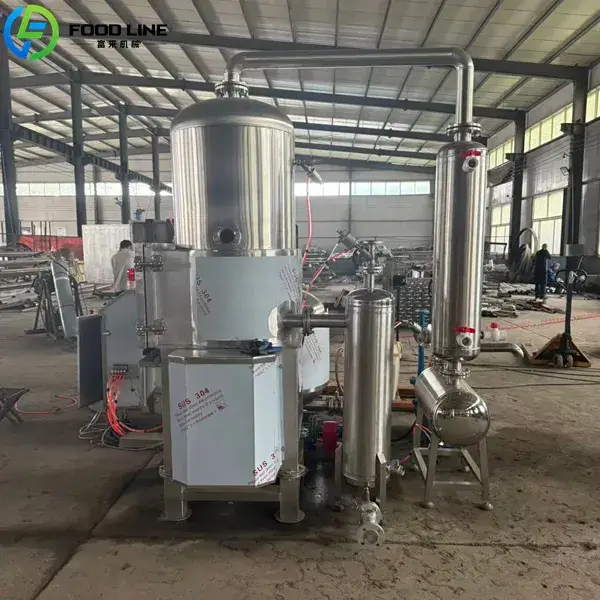
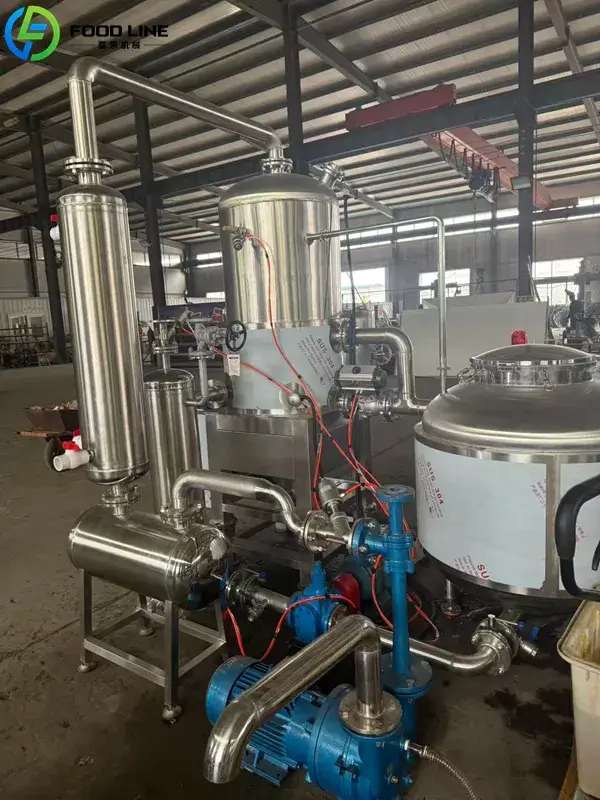
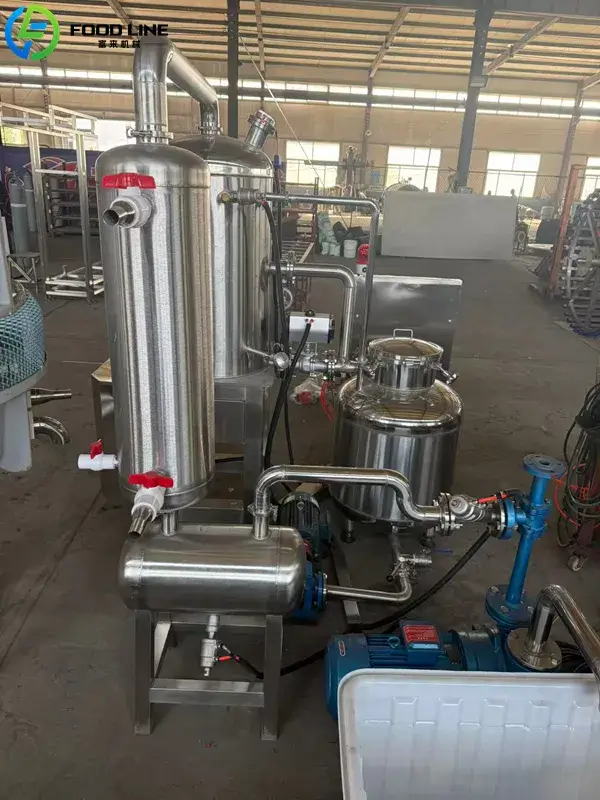
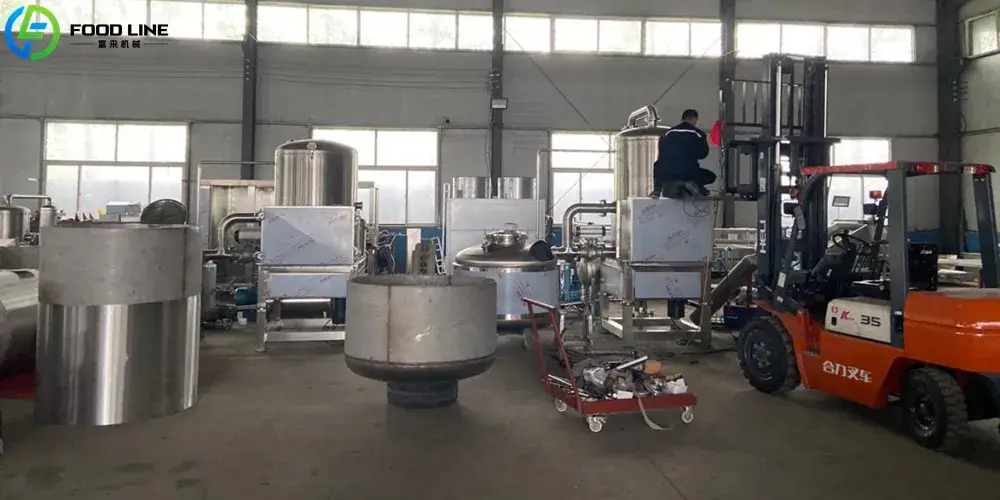
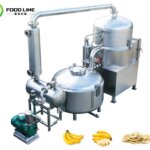
vacuum fryer for safer low temperature vacuum frying
Vacuum frying is a food processing method that utilizes a low-pressure environment to fry food at temperatures lower than those used in conventional frying. It is widely employed in the processing of fruit chips, vegetable chips, nuts, tubers, and various other snack foods. The lower frying temperature helps preserve the natural color, flavor, and texture of many raw ingredients.
For food manufacturers, this low-temperature processing technique offers expanded possibilities for product development. By adjusting parameters such as frying temperature, vacuum level, and frying duration, a diverse range of raw materials can be processed effectively.
Vacuum frying is a frying process conducted within a sealed chamber under low-pressure conditions. Because the pressure inside the chamber is lower than standard atmospheric pressure, the moisture within the food can evaporate at a lower temperature.
Food items are placed into hot oil within the vacuum chamber. The system then establishes a vacuum and regulates the frying temperature. As moisture evaporates from the food, the product becomes drier and crispier.
Compared to traditional frying, this method operates at lower temperatures. It is suitable for raw materials that might otherwise lose their color, flavor, or other quality attributes when exposed to high heat.
automatic vacuum fried food machine for chip production
Seven Key Advantages of Vacuum Frying
1. Lower Frying Temperatures
One of the most significant advantages is the lower frying temperature.
At standard atmospheric pressure, the boiling point of water at sea level is approximately 100°C. Under reduced pressure, this boiling point decreases. Therefore, food can be fried at temperatures significantly lower than those used in many conventional frying processes.
Low-temperature vacuum frying is ideal for fruits and vegetables that are sensitive to high heat. It also allows for greater control over the frying process.
Manufacturers can fine-tune the processing temperature based on the raw materials and the desired characteristics of the final product.
2. Better Color Retention
High-temperature frying often leads to significant browning or darkening, which alters the appearance of fruit and vegetable products.
The low-temperature environment of vacuum frying helps minimize excessive browning. With proper process control, products such as bananas, pineapples, apples, carrots, and pumpkins can better retain their natural color.
Color is a crucial factor for snack foods. Products with a natural appearance are more attractive on retail shelves.
Vacuum-fried products retain the original crispy texture and authentic flavor of the raw ingredients.
For fruit and vegetable snacks, this process removes the majority of the moisture, resulting in a dry, crispy product. The final texture is determined by factors such as slice thickness, moisture content, frying temperature, frying time, and oil quality.
Manufacturers can adjust these parameters to achieve different textures for different products. For example, thinly sliced banana chips can be made into light and crispy snacks. Thicker slices may have a different texture and need a longer processing time.
4. Lower Oil Absorption
In the production of fried foods, oil absorption is a critical concern.
Vacuum frying uses low temperatures and a reduced-pressure environment. The oil content of the final product depends on the characteristics of the raw material, the frying conditions, and the subsequent de-oiling process.
An efficient de-oiling system can effectively reduce the amount of residual oil on the surface of the product after frying. For food manufacturers, controlling oil usage directly impacts both production costs and product quality. Before finalizing processing parameters, the actual oil content should be verified through product testing.
5. Suitable for a Wide Range of Fruits and Vegetables
Traditional deep-frying is applicable to many types of food, but some fruits and vegetables need more precise temperature control.
Vacuum frying is commonly used for products such as bananas, pineapples, apples, mangoes, jackfruit, sweet potatoes, carrots, beetroot, okra, mushrooms, pumpkin. These raw materials can be sliced or cut into other shapes prior to processing.
This provides food manufacturers with more options when developing fruit and vegetable snacks. With appropriate parameter testing, a single frying production line can be used to process a variety of different raw materials.
6. Diverse Options for Product Development
Food manufacturers often need to develop new snack products for different markets. Vacuum frying technology supports a wide range of product concepts.
Fruits such as bananas, pineapples, apples, mangoes, and jackfruit can be transformed into crispy dried fruit chips. Raw materials like sweet potatoes, carrots, pumpkin, okra, and mushrooms can be used to create vegetable-based snacks.
The final products can vary in terms of raw materials, slice thickness, frying temperature, frying duration, vacuum level, final moisture content, texture/mouthfeel, packaging format. This flexibility helps manufacturers test new products and build diverse product portfolios.
Vacuum frying systems usually can control multiple key parameters.
These parameters include:
Oil temperature
Vacuum level
Frying duration
Basket movement (agitation or tumbling)
De-oiling process
Heating conditions
Different raw materials need different process settings. For instance, fruits with higher moisture content may have different frying times from thin slices of vegetables.
Once the appropriate parameters are determined through testing, the factory can use them as the standard operating guidelines for the ongoing production of that product.
What Factors Affect the Quality of Vacuum-Fried Foods?
Raw Materials The freshness, moisture content, sugar content, and maturity of the raw materials can all alter the frying outcome.
Slice Thickness Generally, thinner slices need less processing time than thicker slices. The size of the slices also affects the texture of the final product.
Frying Temperature The frying temperature should be matched according to the raw materials and the target product. Higher temperature does not necessarily mean better results.
Vacuum Level The vacuum level affects moisture evaporation and the frying environment. Different products may need different vacuum settings.
Frying Time If the frying time is too short, there may be excessive moisture remaining in the product. If it is too long, the color, texture or flavor of the product may change.
Oil Removal The oil-removal process following frying influences the final surface characteristics and oil content of the product.
Among these, production capacity is particularly important. Small-scale snack producers may need equipment designed for small batches, whereas large food processing plants might need industrial-scale systems for continuous production.
Conducting product testing before purchasing equipment is also essential. The same equipment may produce very different results under different processing parameters; therefore, sample testing is the best way to determine the optimal equipment configuration for your product.
Selecting the Right Equipment for Your Vacuum Frying Project
For food factories that produce fruit and vegetable chips, root vegetable snacks, and other crispy food products, vacuum frying is a highly viable processing method. This technique, operating at lower temperatures, allows for precise control over a product’s color, texture, flavor, and oil content.
When choosing the right vacuum fryer equipment, you need to consider your raw materials, batch sizes, daily production volume, product types, and the actual conditions of your factory. Before you making a purchase, it is recommended to conduct tests using your actual raw materials and set the corresponding processing parameters based on the target product.
Foodline can provide you with vacuum fried food machines suitable for various food processing projects. If you are planning to build a new production line or upgrade an existing one, please provide our team with information about your product type, expected production capacity, and the country/region where you plan to start production. We will assist you in evaluating and selecting the most suitable equipment for your project.
We use cookies to ensure that we give you the best experience on our website. If you continue to use this site we will assume that you are happy with it.