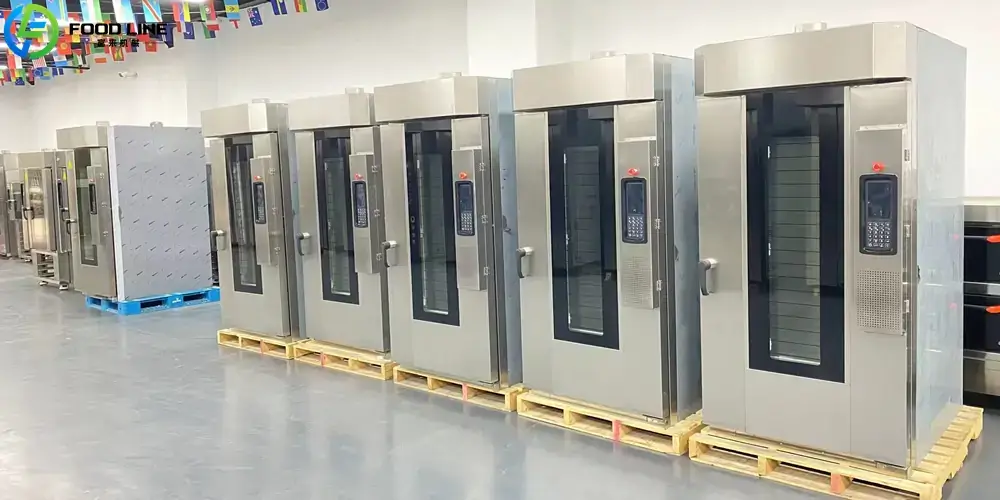
When comparing a hot air convection oven and a conventional oven, many people assume that both perform the same task and operate in largely the same way. While both rely on heat to cook food, the manner in which that heat is distributed creates significant differences in cooking speed, temperature uniformity, and the final texture of the food.
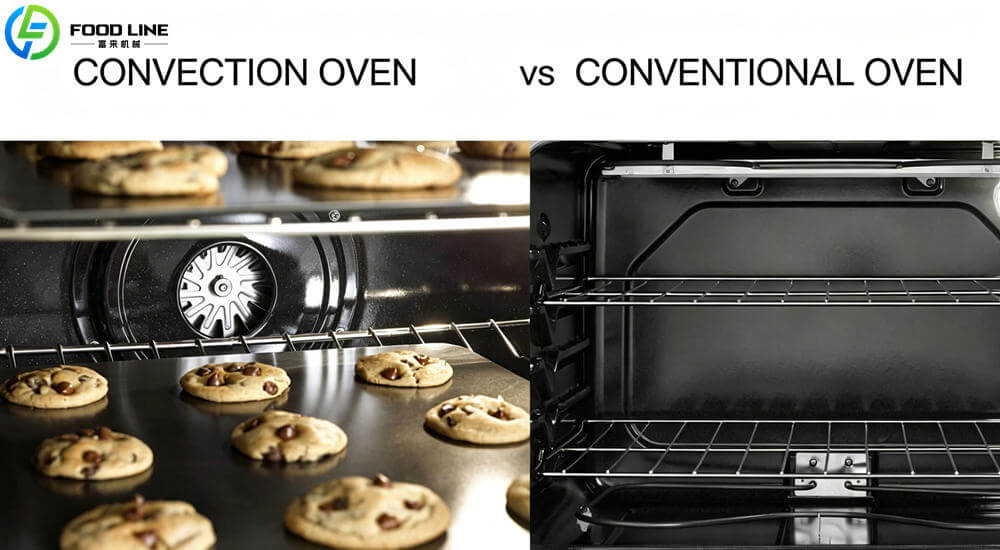
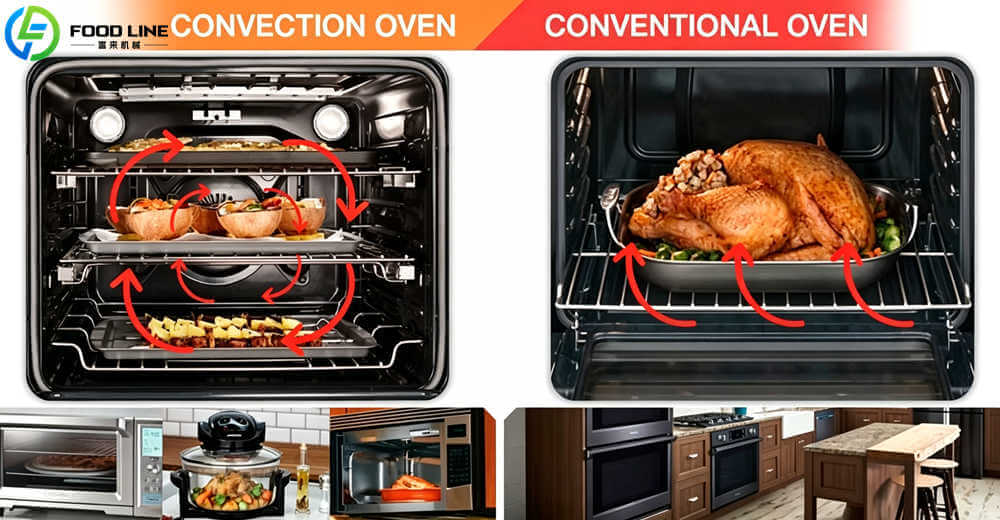
The convection oven utilizes heating elements that work in tandem with a built-in fan. The fan circulates heated air throughout the cooking chamber. Instead of relying only on naturally rising hot air, it delivers heat to the food from multiple directions via moving air.
The constant movement of heated air changes how heat transfers to the food surface. Consequently, food tends to cook faster and acquires a more uniform color.
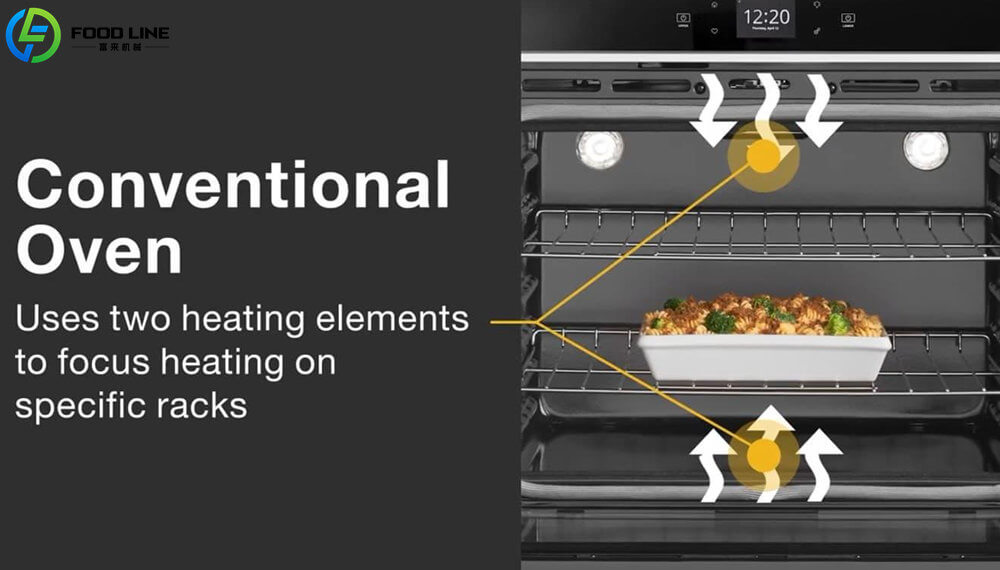
In a conventional oven, the heating elements are located at the top, the bottom, or both. Heat is distributed primarily through natural air movement inside the oven cavity.
Hot air rises while cool air sinks, creating distinct temperature zones within the oven interior. Areas situated closer to the heating elements tend to be hotter than other parts of the oven.
Due to these temperature disparities, if food remains in the exact same position throughout the entire baking process, it may result in uneven heating and, consequently, inconsistent cooking results.
baking difference between hot air circulation oven and conventional oven
Key Differences
How Heat Is Transferred Inside the Oven
The primary difference between the two lies in the way the air moves.
In a conventional oven, the heated air remains relatively static. Food absorbs heat primarily through the surrounding hot air and the radiant heat emitted by the heating elements.
In a hot air convection oven, a fan circulates hot air continuously around the food. Fresh hot air constantly comes into contact with the food’s surface, enhancing the efficiency of heat transfer. This process helps minimize the occurrence of “hot spots” and “cold spots” within the oven cavity.
Temperature Distribution
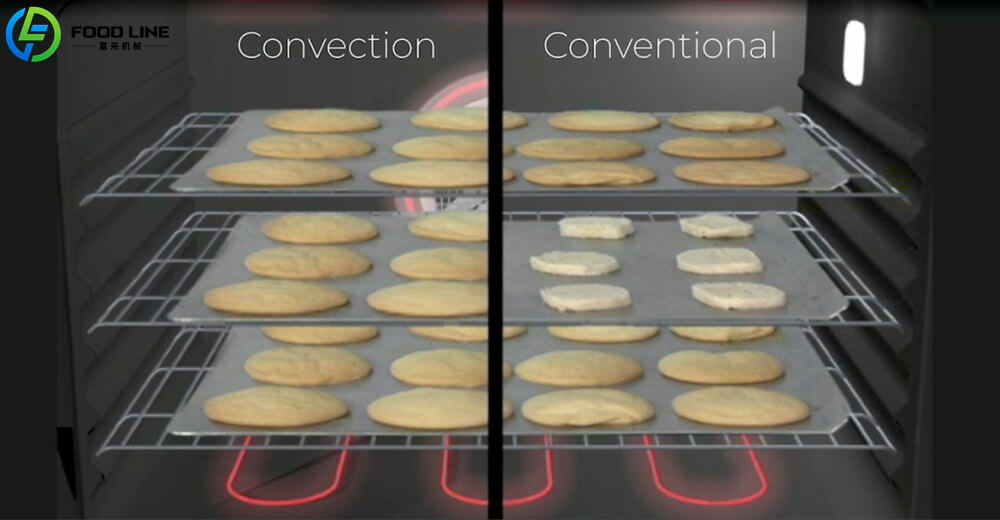
In a conventional oven, temperature fluctuations are common. The temperature on the top rack may be higher than that on the middle rack. Cooking results at the back of the oven may differ from those at the front.
The hot air circulation oven eliminates these discrepancies by circulating air throughout the entire oven cavity. The moving air helps maintain a more balanced temperature environment.
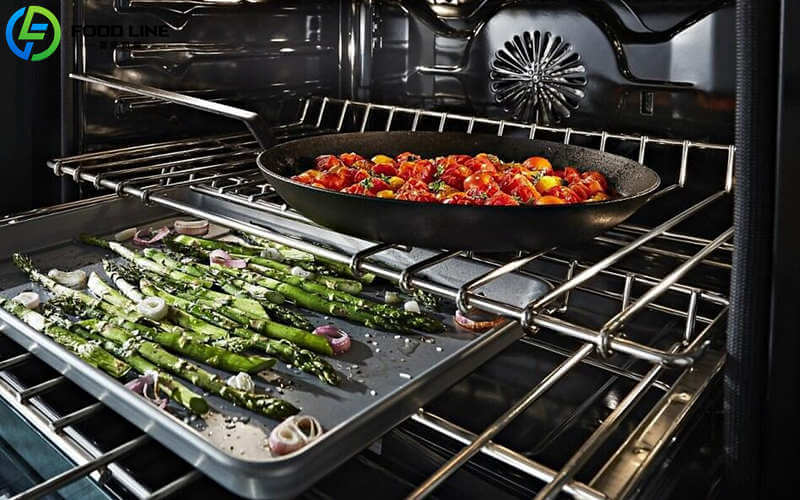
This feature is particularly important for recipes that require the simultaneous use of multiple baking sheets or racks.
Cooking Speedand Efficiency
In a convection environment, heat is transferred to the food more rapidly because the moving air facilitates energy transfer at a higher rate.
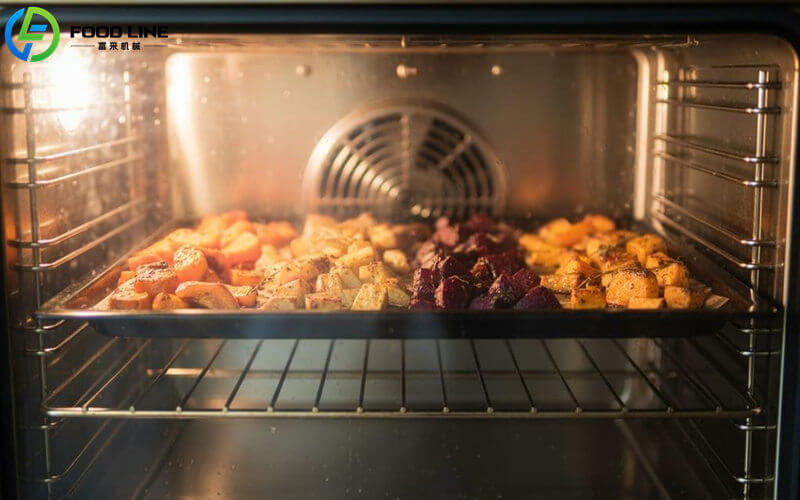
For instance, compared to a conventional oven set to the same temperature, cooking roasted vegetables, cookies, or poultry in a hot air convection oven typically requires less cooking time.
This accelerated heat transfer rate affects not only the time required for cooking but also the browning of the food surface.
Food Texture and Appearance
Air circulation also has an impact on food texture.
For foods that require a crispy exterior, convection cooking often yields excellent results. For instance, the skin of roasted potatoes may become crispier, while chicken skin turns a richer golden hue and achieves a crispier texture.
In contrast, conventional ovens provide a gentler heating environment, resulting in less moisture loss from the food surface. Consequently, certain baked goods (such as sponge cakes or cheesecakes) tend to exhibit a softer, more delicate texture.
The fundamental reason for this difference lies in the varying amounts of moisture lost from the food surface during the cooking process.
At first glance, the only additional component in a hot air convection oven appears to be a simple fan. However, it is precisely this seemingly simple feature that completely transforms the way heat flows within the cooking cavity.
The role of the fan is to create active air circulation, rather than relying solely on natural airflow. This alteration directly influences the oven’s temperature distribution, cooking speed, browning effects, and the final texture of the food. The many differences people perceive when comparing these two types of ovens can, ultimately, all be traced back to this simple principle of airflow.
Foodline – Your Partner of Hot Air Convection Oven
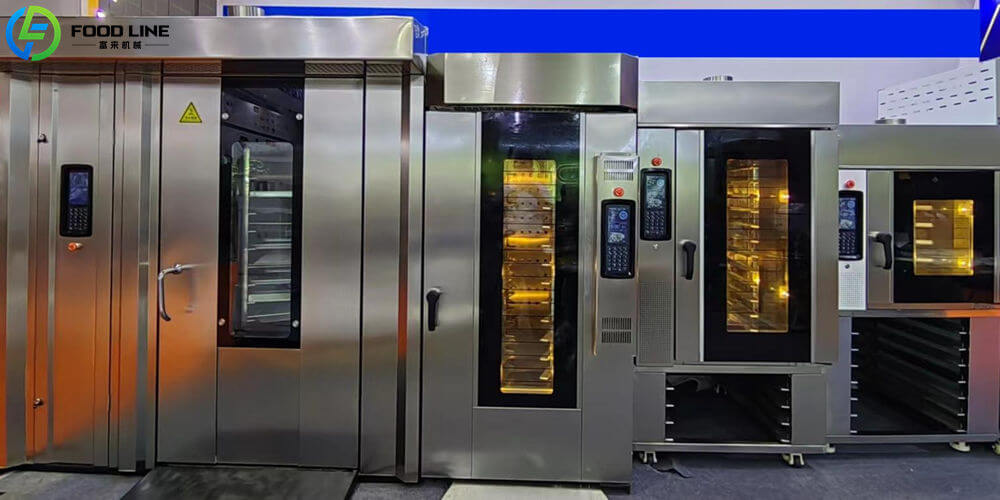
Foodline is a food machinery manufacturer headquartered in Zhengzhou, Henan Province, China. The company develops and produces high-quality food processing equipment. We have have expanded our business to global markets. Our products reach many countries, including the United States, Canada, Australia, France, the United Kingdom, Egypt, and Oman. A distributor in Spain purchased 13 units of hot air convection oven from Foodline.
hot air oven manufacturer in china
Get a Quote for Professional Convection Ovens
If you are looking for a reliable supplier of hot air circulating oven for your bakery, food manufacturing plant, catering business, or equipment distribution operation, Foodline is ready to support your business needs.
Whether you require a single unit or a large-volume order, our team is prepared to provide detailed product information, technical specifications, and customized price quotes tailored to your specific requirements.
We welcome inquiries and business proposals from distributors, wholesalers, and food industry professionals worldwide.
Contact Foodline today to request a quote and learn more about our range of hot air convection oven models.
We use cookies to ensure that we give you the best experience on our website. If you continue to use this site we will assume that you are happy with it.